NWEA Reading Scores give families and schools a cautiously hopeful signal as of October 10, 2026: K-8 reading improved from Spring 2025 to Spring 2026, but recovery is not finished. For parents, teachers, tutors, and community volunteers, the useful question is not whether one report solves the reading challenge. The useful question is how to turn better data into steadier reading practice for children who still need time, instruction, and encouragement.
NWEA reported that MAP Growth data showed sizable reading improvements across Kindergarten through Grade 8 between Spring 2025 and Spring 2026. The same report said most grades remained below Spring 2019 levels, and that Black, Hispanic, and low-income students showed some of the largest gains during that period, according to NWEA’s reading trend report. Those points belong together. The gains matter. The remaining gaps matter too.
As a literacy coach, I read this kind of report as a planning tool rather than a reason for celebration or alarm. Scores can tell us where progress is happening, where support is thin, and where students may need a different instructional response. They cannot replace teacher judgment, family knowledge, or a child’s daily experience with books.
What NWEA Reading Scores Show For K-8
Why NWEA Reading Scores Matter
The most useful way to read NWEA Reading Scores is to look for patterns across grade bands, not just a single number. Kindergarten through second grade readers need strong foundations in oral language, print awareness, phonemic awareness, phonics, vocabulary, and read-aloud comprehension. Upper elementary students need to keep building accuracy and fluency while reading longer, more knowledge-heavy texts. Middle school readers need stamina, vocabulary, background knowledge, and support for making meaning across subjects.
The Spring 2025 to Spring 2026 gains suggest that some school and classroom practices may be helping. That is worth studying closely. If historically underserved student groups made some of the largest gains, district leaders should ask what changed: schedules, intervention time, curriculum use, teacher training, tutoring access, attendance work, family communication, or classroom routines. The report does not prove that one single action caused the gains, so local teams should avoid easy claims. Still, it gives schools a reason to identify practices that match stronger growth and test whether those practices can be sustained.
Why Recovery Is Still Uneven
The caution is just as clear. Reading in most grades was still below pre-COVID-19 levels, using Spring 2019 as the comparison point. That means many students who improved may still be working below the level schools would have expected before the pandemic period. Families may notice this in simple ways: a child reads the words but tires quickly, avoids longer books, guesses at multisyllabic words, or understands a story when it is read aloud but struggles when reading alone.
For community readers following policy responses, school plans, screening, teacher learning, and family notice all connect to the larger literacy conversation. Leap Year Publishing has also covered how evidence-based literacy efforts can shape local planning without promising quick fixes.
From Data Points To Daily Reading Support
Early Grades Need Skill And Language Routines
Young readers need practice that is direct, warm, and frequent. A first grader who is learning sound-spelling patterns benefits from short, clear lessons and many chances to apply those patterns in connected text. A second grader who can decode but reads slowly may need repeated reading, phrase reading, and adult modeling. A kindergartner who loves stories but is still building letter knowledge needs playful practice with sounds, names, rhymes, and print in real books.
Families do not need to turn the kitchen table into a testing center. Ten to fifteen minutes of steady reading, word play, and conversation can support what teachers are doing at school. The key is consistency. Children learn that reading is not only a worksheet or a score report. It is something people use every day to laugh, ask questions, follow directions, remember information, and share stories.
Middle School Readers Need Fluency And Stamina
NWEA Reading Scores are especially useful in middle school because older struggling readers can be easy to miss. A sixth, seventh, or eighth grader may hide reading difficulty through silence, humor, avoidance, or overreliance on audio and peer help. Schools should not assume that adolescents who struggle simply need to “try harder.” They may need diagnostic checks for word reading, fluency, vocabulary, and comprehension, followed by instruction that respects their age.
For younger students, NWEA describes MAP Reading Fluency with Coach as a K-5 tool that places students into reading pathways and uses micro-interventions based on error types through MAP Reading Fluency. That kind of design points to a practical principle for all grades: reading help should be specific. A student who misreads vowel patterns needs different support from a student who reads accurately but too slowly, and both need different support from a student who lacks vocabulary for science or social studies text.
Building Coherent School And Home Plans
Use Assessment As A Starting Point
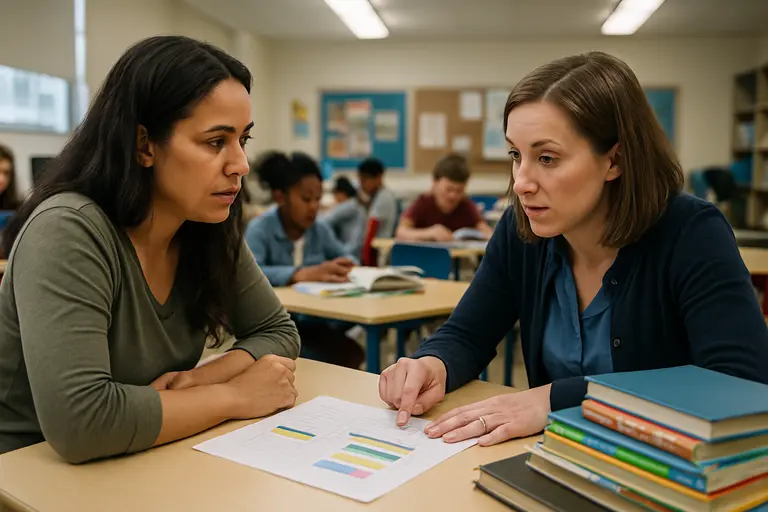
Assessment data should start a conversation, not end it. Teachers can use score trends to group students for instruction, check whether intervention is working, and decide whether a child needs a closer look. Families can ask calm, practical questions: What skill is my child working on now? What kind of text is a good match? How will we know if support is helping? What can we do at home that will not conflict with classroom instruction?
Schools should also look across classrooms. If one grade level is making stronger gains, leaders can study the instructional schedule, materials, coaching, and intervention timing. If another grade is stalled, the answer may not be more testing. It may be better use of the data already available, clearer lesson routines, stronger small-group instruction, or more protected time for reading.
Make Practice Visible At Home
Families can respond to reading data without pressure or shame. The goal is to make reading visible, expected, and emotionally safe. These steps are simple enough for busy households and useful for teachers to share during conferences:
- Keep a small basket of books where the child already spends time, such as the kitchen, bedroom, or car.
- Read aloud beyond the preschool years, especially when a child can understand a book that is too hard to read alone.
- Let children reread easier books to build fluency, confidence, and expression.
- Ask one open question after reading, such as “What surprised you?” instead of giving a quiz.
- Share concerns early with the teacher if reading at home regularly leads to tears, avoidance, or fatigue.
Community groups can help by making reading feel public and normal. Libraries, youth programs, school family nights, faith-based service groups, and local clubs can host book swaps, read-aloud hours, or family information sessions. Readers exploring other community-focused sites in our network may also visit Stuyvesant Yacht Club for an example of how community connections extend beyond educational settings.
NWEA Reading Scores And Local Reading Habits
A Practical Reading Response For Communities
NWEA Reading Scores should push communities toward steady action. The Spring 2025 to Spring 2026 gains are encouraging because they show movement after a difficult period. The fact that most grades remained below Spring 2019 levels means children still need support that lasts longer than one testing cycle.
For schools, that means aligning assessment, instruction, intervention, and teacher learning so students do not receive scattered help. For families, it means building small reading routines that children can live with: a bedtime chapter, a library visit, a reread of a favorite book, or a shared article about a topic the child already loves. For community partners, it means asking schools what kind of help is actually useful before launching a program.
The best response is practical and local. Use the data to notice need. Use instruction to target the right skills. Use books and conversation to keep children connected to meaning. Reading growth is built through many ordinary moments, repeated often enough for children to trust that they can become stronger readers.
