Hands-On Tools for Tactile Learning
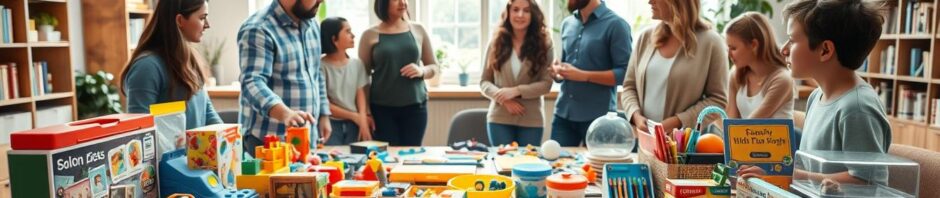
Hands-on tools are essential for tactile learning. They allow students to engage with materials and explore different textures and sensations. By incorporating hands-on tools into their learning experience, students can develop a deeper understanding of the subject matter.
One example of hands-on tools is tactile maps. These maps provide a visual representation of geographical information and allow students to explore different landscapes and features through touch. By tracing the contours of mountains or feeling the texture of different terrains, students can gain a more immersive understanding of the world around them.
Another example of hands-on tools is sensory kits. These kits contain a variety of materials and objects that stimulate the senses, such as different textures, smells, and sounds. By engaging with these materials, students can develop their sensory awareness and enhance their learning experience.
Hands-on tools also promote engagement and participation in the learning process. When students are actively involved in exploring and manipulating materials, they become more invested in their learning. This hands-on approach fosters a sense of curiosity and encourages students to ask questions and seek answers.
By incorporating hands-on tools into their learning experience, students can develop a deeper understanding of the subject matter. Whether it’s through tactile maps, sensory kits, or other hands-on tools, these materials provide a unique and engaging way to learn and explore.
Benefits of Hands-On Tools for Tactile Learning
Hands-on tools offer several benefits for tactile learning:
- Enhanced engagement: Hands-on tools promote active participation and engagement in the learning process.
- Improved understanding: By exploring and manipulating materials, students develop a deeper understanding of the subject matter.
- Development of sensory awareness: Hands-on tools stimulate the senses and help students develop their sensory awareness.
- Encouragement of curiosity: Hands-on tools foster a sense of curiosity and encourage students to ask questions and seek answers.
By incorporating hands-on tools into their learning experience, students can engage in tactile learning in a meaningful and interactive way.
Exploring the World of Math Manipulatives
Math manipulatives are tools that help students understand and solve math problems. They are designed to make learning math fun and interactive. By using these tools, students can explore different concepts and develop a deeper understanding of math.
There are many types of math manipulatives available, each with its own unique features. Some popular examples include:
- Base-ten blocks: These blocks are used to represent numbers and help students understand place value. Students can build numbers and perform operations like addition and subtraction using these blocks.
- Fraction tiles: Fraction tiles are used to represent fractions and help students understand equivalent fractions. Students can use these tiles to compare fractions and perform operations like addition and subtraction.
- Geometry sets: Geometry sets include various shapes and tools that help students explore geometric concepts. Students can use these sets to build shapes, identify patterns, and develop spatial reasoning skills.
By incorporating math manipulatives into their learning, students can develop a deeper understanding of math concepts. These tools provide hands-on experience and allow students to visualize and explore mathematical ideas in a tangible way.
Math manipulatives are not only beneficial for students but also for teachers. They provide a range of activities and lessons that can be tailored to meet the needs of different learners. Teachers can use these tools to create engaging and interactive math lessons that promote problem-solving skills and critical thinking.
Overall, math manipulatives play a vital role in math education. They offer a hands-on and interactive way for students to learn and understand math concepts. By incorporating these tools into their teaching practices, teachers can create a more engaging and effective learning environment for their students.
Benefits of Math Manipulatives
Math manipulatives offer several benefits for students and teachers. Some of the key advantages include:
- Improved understanding: Math manipulatives help students develop a deeper understanding of math concepts. By using these tools, students can visualize and explore mathematical ideas in a tangible way.
- Enhanced problem-solving skills: Math manipulatives promote problem-solving skills and critical thinking. Students learn to analyze problems, identify solutions, and develop logical reasoning.
- Engaging and interactive learning: Math manipulatives make learning math fun and engaging. Students are actively involved in the learning process and can explore different concepts in a hands-on way.
- Development of spatial reasoning: Math manipulatives help students develop spatial reasoning skills. By working with different shapes and tools, students can improve their ability to visualize and understand spatial relationships.
By incorporating math manipulatives into their teaching practices, teachers can create a more engaging and effective learning environment for their students. These tools provide a range of activities and lessons that promote problem-solving skills, critical thinking, and a deeper understanding of math concepts.
Why Choose STEM Kits for Kids?
STEM kits are a fantastic way to encourage kids to explore and learn about science, technology, engineering, and math. These kits are designed to be fun and engaging, making learning a delightful experience for children.
One of the key benefits of STEM kits is their ability to align with educational standards. They are carefully crafted to meet specific learning objectives, ensuring that kids are developing essential skills in a structured and effective way.
Another advantage of STEM kits is their focus on safety. These kits are designed with safety in mind, using materials and components that are safe for children to handle and experiment with. This allows kids to explore and learn without worrying about their well-being.
Reusability is another important feature of STEM kits. These kits are designed to be used multiple times, allowing kids to continue exploring and learning long after they’ve completed the initial project. This makes STEM kits a valuable investment for parents and educators, as they provide ongoing educational value.
By choosing STEM kits for kids, parents and educators can provide a fun and engaging way for children to develop their skills in science, technology, engineering, and math. These kits offer a hands-on learning experience that fosters curiosity, creativity, and critical thinking.
Benefits of STEM Kits for Kids:
- Align with educational standards
- Focus on safety
- Reusability
- Encourage hands-on learning
- Foster curiosity, creativity, and critical thinking
Building a Low‑Cost Home Makerspace
Forget the fancy tech-bro dream of a makerspace. Your home version is all about being creative with what you have. It’s not about having lots of money. It’s about using what you already have.
Start by looking at your home in a new way. That messy drawer is actually a treasure trove of parts. Cardboard boxes are great for building things. And an empty yogurt container can be a mini-plant holder.
The space you use is less important than the ideas you have. Take over a corner of the dining table or a spot on the floor. Even a small shelf in the garage can be your makerspace. It’s all about saying, Here, we build things.
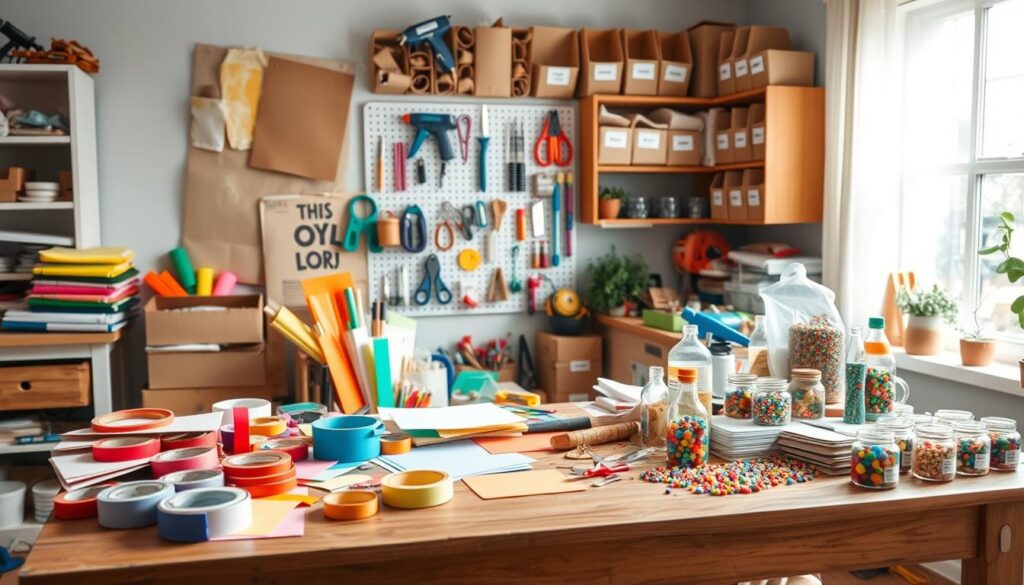
Now, it’s time to gather your supplies. Don’t buy a fancy robotics kit. Instead, collect things that can be used in many ways. Think of it like a sculptor working with found objects.
Begin with the basics: duct tape, glue sticks, and pipe cleaners. These help you connect things. Add simple tools like scissors and a drill. They make it possible to create.
Next, find useful things to reuse. Save items like toilet paper tubes and plastic bottles. They’re not just trash; they’re materials waiting to be used.
Art supplies are also important. You’ll need construction paper, markers, and clay. They help you add color and personality to your projects. Remember, a few key supplies can lead to many creative ideas.
The real magic happens when you mix different things together. For example, pipe cleaners, cardboard, and markers can make a fun dinosaur. Or, plastic bottles, string, and paint can create a rain gauge. The possibilities are endless.
This way of creating teaches more than just how to build things. It teaches you to be resourceful and solve problems with what you have. It’s a way of thinking that’s different from buying everything you need.
A low-cost makerspace is not just a place. It’s a way of seeing the world. It finds value in things that others might throw away. This mindset turns trash into something amazing.
Science at Home: Microscopes, sensors, lab safety basics
Setting up a science lab at home is not about making a high school chemistry room. It’s about sparking curiosity with the right tools. We aim for real inquiry, not just fun experiments.
Start with a good microscope. It’s not just for fun. A quality microscope lets you see tiny worlds. When your child sees pond water full of life, they become a scientist.
Then, we move to sensors. These gadgets connect to devices, turning simple observations into detailed data. This turns a pond study into a chance to analyze pH levels. It’s about going from “wow” to “let’s understand this.”
Lab safety is key, not just a rule. It’s the most important thing in your science lab. Safety ensures your experiments can continue.
Think of goggles and gloves as safety belts. A well-ventilated area means more than just opening a window. We mix fun with safety.
Here’s a basic lab safety kit:
- Eye protection first: Use goggles that fit.
- The glove rule: Wear nitrile for chemicals, basic gloves for biology.
- Ventilation literacy: Know when you need a fume hood.
- The spill station: Have baking soda for acids, vinegar for bases.
- Digital backup: Use virtual labs for risky experiments.
Don’t forget about digital tools. Sites like PhET Interactive Simulations offer great virtual labs. They’re perfect for practicing or exploring without danger.
We aim to inspire, not just copy. We’re creating a space for questions and answers. With the right tools and safety, you’re not just setting up experiments. You’re shaping young minds into scientists.
The best science lab doesn’t always get perfect results. It encourages questions, careful observations, and respect for the process. We’re aiming to inspire greatness, not just follow rules.
Math Tools: Base‑Ten, fraction tiles, geometry sets, graphing tech
Learning math can feel overwhelming, like moving from counting apples to solving for ‘x’. The right tools can help bridge this gap. Our goal is to make abstract concepts real, like a filmmaker uses props to bring a story to life.
This section reviews tools that help turn confusion into understanding. We focus on the physical basics of math.
Manipulatives are more than toys; they make complex math concepts real and touchable.
Let’s look at the essential tools. The table below is not just a shopping list. It’s a guide for building a strong foundation in math.
| Tool | Core Concept It Makes Tangible | Ideal Grade Band | The “Aha!” Moment It Delivers |
|---|---|---|---|
| Base-Ten Blocks | Place value & our decimal number system | K-5 | Seeing that 10 “ones” snap together to become one “ten”—the foundational rule of our math universe. |
| Fraction Tiles | Equivalence, addition, & comparison of parts | 3-8 | Visually proving why 1/2 + 1/3 is 5/6, not 2/5. The mystery of common denominators solved by fitting pieces together. |
| Geometry Sets | Definitions, properties, & constructions of shapes | 4-12 | Using a compass to discover that all points on a circle are equidistant from the center—the definition becomes the action. |
Base-ten blocks are key to understanding our number system. They show the difference between numbers. For subtraction, you trade a long “ten” rod for ten “one” cubes. It’s math you can hold in your hands.
Fraction tiles solve the debate over who gets more cake. By lining up bars for halves, thirds, and more, you see that fractions are equal. Adding fractions becomes a puzzle of finding matching pieces, making common denominators obvious.
Geometry sets are more than for drawing circles. They help understand space. A compass defines a circle. A protractor measures angles. When you construct a perpendicular bisector, you’re not just following steps; you’re proving a geometric truth.
Once you have a solid foundation, you move to digital tools. This is where math meets technology. Graphing technology, from apps like Desmos or GeoGebra to graphing calculators, extends your understanding.
Why? Because some math is too complex to do by hand. This tech lets you:
- See functions instantly: What does y = x² look like? How does it change with +3?
- Manipulate data dynamically: Drag a point on a sine wave to see how amplitude and period change.
- Analyze data: Plot points to find a line of best fit, turning statistics into a story.
This is the power of modern math education. First, concrete understanding, then digital tools to explore more complex ideas. Khan Academy is great at integrating these tools, guiding you through visual landscapes.
Choosing these tools is not about collecting gadgets. It’s about building a complete math toolkit that grows with your learner. Start with blocks and tiles for numbers and parts. Then, use geometry tools to define shapes. Finish with technology to graph, analyze, and see the patterns that all that work leads to.
Using Magnetic Letters for Word Building
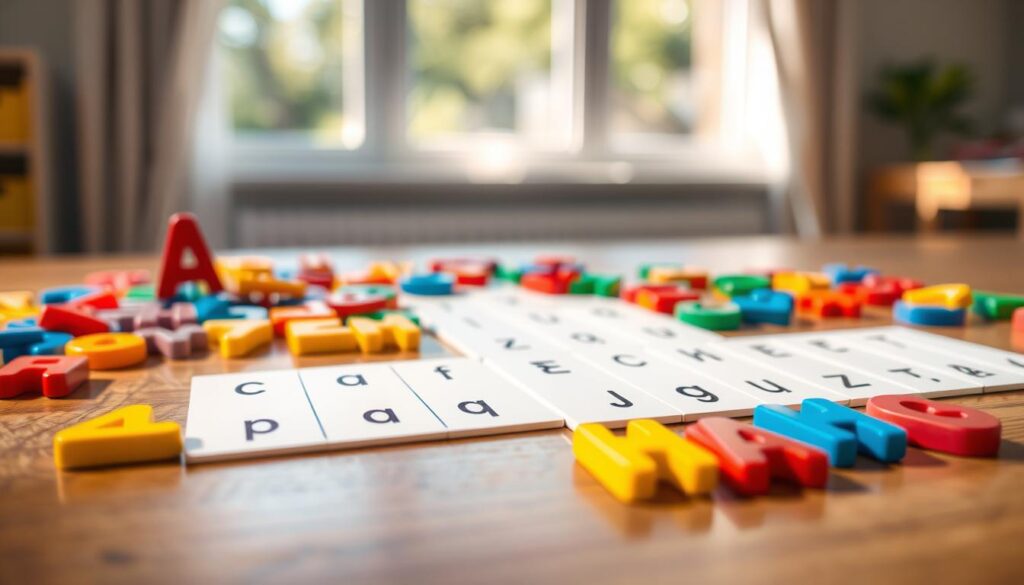
Magnetic letters are a fantastic tool for teaching word building. They make it easy for kids to create words by arranging the letters. This hands-on activity helps them understand how words are structured.
By using magnetic letters, kids can build simple words and then more complex ones. This activity is great for reinforcing phonics skills and improving reading and writing abilities.
Here are some ways to use magnetic letters for word building:
- Word Building Activities: Set up a magnetic letter board or a surface with a magnetic base. Provide a variety of magnetic letters and have kids arrange them to form words. This activity encourages kids to think creatively and develop their problem-solving skills.
- Phonics Practice: Use magnetic letters to focus on specific phonics skills, such as sounding out words or identifying word families. Kids can build words that match a specific sound or pattern, reinforcing their understanding of phonics.
- Reading and Writing Practice: Use magnetic letters to create simple words and then gradually introduce more complex words. This helps kids develop their reading and writing skills as they build their vocabulary.
By incorporating magnetic letters into your teaching, you can make word building a fun and engaging activity for kids. It allows them to explore the world of words and develop their literacy skills in a hands-on and interactive way.
Benefits of Using Magnetic Letters for Word Building
Using magnetic letters for word building offers several benefits for kids:
- Improved Literacy Skills: Magnetic letters help kids develop their reading and writing skills as they build words and explore different combinations of letters.
- Enhanced Phonics Understanding: By focusing on specific phonics skills, magnetic letters help kids develop a deeper understanding of the sounds and patterns in words.
- Increased Vocabulary: As kids build words using magnetic letters, they expand their vocabulary and become familiar with new words and concepts.
- Engaging and Interactive: Magnetic letters make word building a fun and interactive activity, keeping kids engaged and motivated to learn.
By incorporating magnetic letters into your teaching, you can create a hands-on and engaging learning experience for kids. It allows them to explore the world of words and develop their literacy skills in a fun and interactive way.
Interactive Learning Experiences
Interactive learning experiences are revolutionizing the way we engage with educational content. By incorporating digital interactives, AR/VR, and simulations, educators can create immersive and interactive learning environments that captivate students and enhance their understanding of complex concepts.
One example of interactive learning is the use of PhET simulations. These simulations provide students with a hands-on experience, allowing them to explore scientific concepts in a virtual environment. By manipulating variables and observing the outcomes, students can develop a deeper understanding of scientific principles and make connections between theoretical knowledge and real-world applications.
Another example is the integration of AR/VR technology in educational settings. AR/VR experiences can transport students into virtual environments, allowing them to explore historical sites, conduct virtual field trips, and interact with virtual objects. This immersive approach to learning fosters engagement, curiosity, and a deeper connection to the subject matter.
Interactive learning experiences also promote active participation and collaboration among students. By engaging with digital interactives, students can work together to solve problems, analyze data, and develop critical thinking skills. This collaborative approach to learning fosters a sense of community and encourages students to share their ideas and perspectives.
Overall, interactive learning experiences offer a powerful way to enhance student engagement, promote deeper understanding, and foster a love for learning. By embracing digital interactives, AR/VR, and simulations, educators can create immersive and interactive learning environments that inspire students to explore, discover, and thrive.
Benefits of Interactive Learning Experiences
Interactive learning experiences offer numerous benefits for students and educators alike. Some of the key advantages include:
- Enhanced engagement: Interactive learning experiences captivate students’ attention and keep them actively engaged throughout the learning process.
- Deeper understanding: By actively participating in interactive learning experiences, students develop a deeper understanding of complex concepts and can make connections between theoretical knowledge and real-world applications.
- Improved retention: Interactive learning experiences promote active participation and hands-on exploration, leading to better retention of information and a stronger foundation for future learning.
- Development of critical thinking skills: Interactive learning experiences encourage students to analyze data, solve problems, and think critically, fostering the development of essential skills for success in an ever-changing world.
By embracing interactive learning experiences, educators can create a more engaging, interactive, and effective learning environment that prepares students for success in the 21st century.
How to Rotate Your Storage Solutions
Rotating your storage solutions is a great way to keep your space organized and fresh. It’s like giving your storage a mini-makeover without spending a lot. Here are some tips to help you rotate your storage solutions:
1. Start with a Plan
Before you begin, take some time to plan out your rotation. Think about what you want to achieve and what items you want to feature. This will help you make a cohesive and organized space.
2. Choose a Theme
Consider choosing a theme for your rotation. This could be based on a specific color palette, style, or even a particular season. Having a theme will help tie everything together and create a cohesive look.
3. Select Items to Display
Choose the items you want to display during your rotation. This could include decorative objects, books, or even seasonal items. Make sure to select items that complement your theme and add visual interest to your space.
4. Store the Rest
Once you’ve selected the items to display, it’s time to store the rest. Use storage solutions like baskets, bins, or shelves to keep the items you’re not displaying organized and out of sight. This will help maintain a clutter-free space.
5. Rotate and Refresh
Once your rotation is set up, it’s time to rotate and refresh your storage solutions. Simply swap out the items you’re displaying with the ones you’ve stored away. This will give your space a fresh and updated look.
Remember, rotating your storage solutions is all about keeping your space organized and visually appealing. Experiment with different themes, items, and storage solutions to find what works best for you and your unique style.
By following these tips, you can easily rotate your storage solutions and keep your space looking its best. So go ahead, get creative, and enjoy the benefits of a well-organized and stylish home.
Creating a Budget Planner for Your School
Creating a budget planner is a key step in managing school finances effectively. It helps in tracking expenses and ensuring that funds are allocated correctly. A well-structured budget planner should include sections for different categories of expenses, such as staff salaries, curriculum providers, and used materials.
Here are some essential components to include in your budget planner:
- Staff Salaries: This section should detail the salaries of all school staff, including teachers, administrators, and support staff.
- Curriculum Providers: List the costs of curriculum materials and services provided by external suppliers.
- Used Materials: Include the costs of purchasing and maintaining used materials, such as textbooks and educational resources.
By organizing these expenses, you can better understand where your funds are being allocated and make informed decisions about budgeting. A detailed budget planner helps in identifying areas where costs can be reduced and ensures that all necessary expenses are covered.
Remember, a budget planner is not just a financial tool but also a strategic document that guides your school’s financial planning. It helps in setting realistic financial goals and ensures that your school operates within its means.
By following these steps, you can create a budget planner that effectively manages your school’s finances and supports its overall goals and objectives.
