
Alachua County Reads is best understood as a countywide literacy coordination effort rather than a single classroom program. The recent work described by Alachua County and local reporting connects public schools, community organizations, tutoring providers, volunteers, library access, and adult learning needs. That matters because reading development does not happen in one setting. Children practice in classrooms, after-school programs, homes, libraries, and summer programs, while adults may need support for work, caregiving, school communication, health forms, and daily tasks.
The initiative’s value is in how it brings these pieces closer together. On August 1, 2026, Alachua County launched a Virtual Literacy Hub to support programming across community-based partners and Alachua County Public Schools, with attention to intervention and instructional priorities, according to the county’s update on the collaborative literacy initiative. In October 2025, the county also initiated the Literacy Catalyst Initiative, run by PEAK Literacy, to provide high-dosage reading tutoring to more than 300 youth in 11 community organizations and to plan for expanded adult literacy services.
What Alachua County Reads Includes
Alachua County Reads And The Virtual Hub
The Virtual Literacy Hub gives the initiative a shared point of reference. For educators and community groups, that kind of shared space can reduce fragmentation. A school may be focused on intervention blocks and classroom instruction, while an after-school partner may be focused on homework help, attendance, and family communication. A hub can help those partners work from common priorities instead of separate assumptions.
This is especially useful when literacy support reaches multiple age groups. Young children may need phonics, vocabulary, oral language, and read-aloud routines. Upper elementary students may need fluency, comprehension practice, and subject-area vocabulary. Teens may need support with academic reading, writing tasks, and confidence. Adults may need practical literacy support connected to forms, employment goals, parenting, and further education. Alachua County Reads appears to recognize that these needs are linked, even though they require different instructional approaches.
The Role Of PEAK Literacy Tutoring
High-dosage tutoring is one of the most concrete pieces of the local work. The county reported that the Literacy Catalyst Initiative served more than 300 youth through 11 community organizations. By Fall 2026, WUFT reported that PEAK Literacy was expanding tutoring from about 300 children to more than 600 children across Alachua County, supported by trained volunteers in after-school and community settings through the PEAK Literacy expansion.
That expansion is significant because it moves reading help closer to where children already spend time. Not every family can add private tutoring, transportation, or extra appointments to the week. Community-based tutoring can lower those barriers, especially when volunteers are trained and connected to a shared literacy plan. The available reporting does not prove long-term reading outcomes yet, so the fairest way to describe the expansion is this: Alachua County has increased access to structured reading help, and the next important question is how progress will be measured over time.
Why Local Reading Data Matters
Third Grade Reading As A Community Signal
Local reading data gives the initiative urgency. Research notes provided for Alachua County show third grade reading proficiency between 50% and 55% from 2020 through 2024, with 56% of Alachua third graders scoring at or above grade level in 2023–24, compared with 55% statewide. Those figures suggest that the county is near the state rate, but they also show that many students still need support before and after third grade.
Third grade data should not be treated as the only measure of literacy. Children develop at different rates, and a single score cannot show a child’s full language, knowledge, or motivation. Still, third grade reading is a useful signal because students are increasingly expected to read in order to learn across subjects. A countywide effort can use that signal to strengthen early screening, family communication, tutoring, library access, and summer reading routines without reducing children to test results.
Equity Gaps Require Shared Responsibility
The research notes also identify large differences by race in 2023–24 reading outcomes: about 33% of Black students in Alachua County were reading at grade level, compared with 74% of White students and about 78% of Asian students. These gaps should be read as a call for better access, stronger instruction, and sustained support, not as a reflection of children’s potential.
Community literacy work is most helpful when it avoids blame and focuses on conditions that can be changed. That includes access to trained tutors, consistent reading materials, transportation-aware programming, family updates that are easy to understand, and connections between school-day instruction and after-school practice. It also includes respect for families. Parents and caregivers often want to help, but they may need clear information about what their child is working on and what kind of practice will make the best use of limited time at home.
How Families And Community Partners Can Help
Practical Support At Home
Families do not need to recreate school at the kitchen table. They can support reading by building small, steady habits: reading aloud, listening to a child read a short passage, talking about a story, visiting the library, or keeping books where children can reach them. For younger children, conversation and play also support the language base that reading grows from. Families looking for related early language ideas can find more parent-friendly resources at Talk and Play, a website that offers guidance and activities.
For children already receiving tutoring, home practice should be encouraging rather than punitive. A child who spends the day working hard at reading may need short, successful practice at home, not another long session filled with correction. Caregivers can ask tutors or teachers for one or two specific skills to reinforce, such as rereading a familiar passage, practicing letter-sound patterns, or explaining what happened in a story.
Useful Roles For Libraries And Volunteers
Libraries and volunteers are central to the community side of literacy. Research notes show that the Alachua County Library District serves about 271,588 residents and operates branches, two bookmobiles, and outreach to the county jail. The same notes report strong library use during 2024–25 programming, including tens of thousands of program attendees, new library cards, and checkouts or renewals. Those numbers point to an existing public access system that can support children, families, and adults.
- Volunteers can provide consistent tutoring times, read-aloud support, and encouragement when they follow program training.
- Libraries can connect families with books, cards, summer programs, bookmobiles, and quiet reading spaces.
- Schools can help families understand reading data in plain language and connect students to community support.
- Community organizations can host tutoring where children already gather after school.
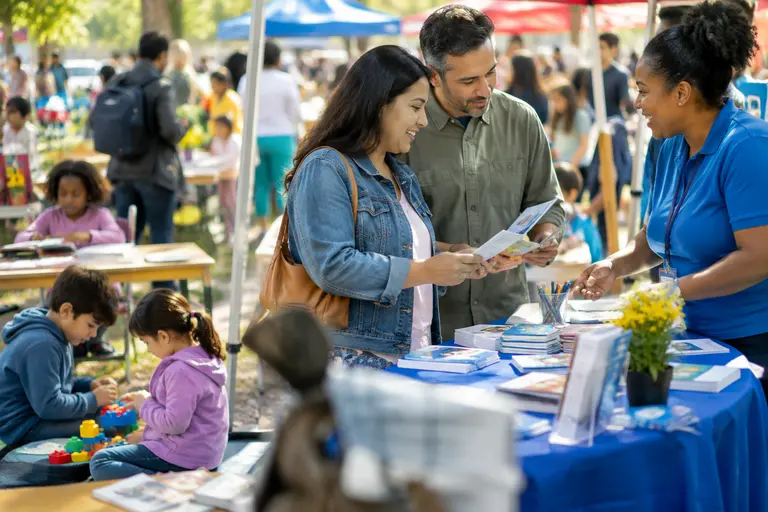
For communities watching this work from outside Alachua County, one practical lesson is that literacy support needs more than one doorway. A family may first connect through a school notice, a library card, an after-school program, a tutor, or a community event. The stronger the connections among those doors, the easier it becomes for families to stay involved.
Alachua County Reads Across Age Groups
Alachua County Reads has gained attention because it links early reading, youth tutoring, community partners, school priorities, and adult literacy planning. That full-age view is important. A child’s reading life is shaped by the adults around them, and adult literacy needs can affect employment, school communication, health access, and family routines. Supporting adults and children through connected systems makes practical sense for a county effort.
The next phase should be judged carefully and fairly. Expanded tutoring access is promising, but communities should look for transparent measures over time: student participation, attendance, skill growth, family engagement, volunteer preparation, and adult literacy access. No single initiative can solve every reading challenge. Still, Alachua County Reads gives schools, libraries, nonprofits, volunteers, and families a clearer structure for working toward the same goal: more residents with the reading skills and confidence they need for school, work, and daily life.
