
Homeschool disability advocacy often begins with a hard family question: can a child’s learning, health, communication, or behavioral needs be met well enough in the current school setting? For some parents, homeschooling feels less like a preference and more like a response to unmet needs. As of October 2026, about 19% of homeschooling parents said they homeschooled partly because their child had physical or mental health needs that public schools “can’t or won’t address,” according to a Times Union report.
That figure does not prove that homeschooling is the best answer for every child with a disability. It does show why families need clear, practical planning before leaving a public school system. Public schools operate under special education laws and procedures that do not always follow a child into a home education setting in the same way. Parents may gain daily flexibility, but they may also lose access to services, dispute processes, and built-in documentation systems.
Why Homeschool Disability Advocacy Has Grown
Homeschool Disability Advocacy Starts With The Reason For Leaving
Good homeschool disability advocacy starts with naming the reason for withdrawal in plain language. A family might be responding to anxiety, a medical condition, reading delays, sensory needs, mobility issues, speech and language concerns, or a long disagreement about services. Those reasons should be written down before the family changes placement, because they shape the learning plan that comes next.
For literacy and curriculum planning, the key question is not simply, “Can we homeschool?” It is, “What does this child need every week to make educational progress?” A child with dyslexia may need structured literacy instruction, repeated reading practice, assistive technology, and books at the right level. A child with a health impairment may need short lessons, rest periods, predictable routines, and flexible pacing. A child with communication needs may need speech practice woven into reading, writing, and daily conversation.
What The Available Data Can And Cannot Tell Families
The October 2026 parent-reported figure helps explain why disability-related homeschooling is part of the broader education conversation. Still, it should be read carefully. It tells us that many parents identify disability or health needs as one reason for homeschooling. It does not tell us whether each child received better instruction at home, whether services continued, or whether every family had equal access to trained support.
That distinction matters for inclusive education. Families should avoid treating withdrawal as the finish line. It is only a change in setting. The child still needs instruction, progress checks, social connection, and support that matches documented needs. For children learning to read, write, communicate, or manage attention, the home plan should be specific enough that another adult could understand what is being taught and how progress is being checked.
Legal Hurdles Families Should Map Before Withdrawing
IDEA Services May Not Follow The Child Home
In practical terms, homeschool disability advocacy requires families to understand what changes when a child leaves public school. The Individuals with Disabilities Education Act is tied closely to public school responsibilities. The research record notes that some parents give up legally guaranteed public school supports when they homeschool, unless the state treats homeschool students like private school students for certain special education purposes. A California OAH decision reflects how placement and service questions can become highly specific to law, facts, and state procedures.
This is not a reason to frighten families away from homeschooling. It is a reason to slow down before making a final decision. Parents should ask what services are available after withdrawal, whether the district will conduct evaluations, whether a service plan is possible, and what records the family should keep. Those answers may differ by state and by child. Families facing a dispute should seek state-specific guidance from a qualified special education attorney, parent training center, or disability rights organization.
State Rules Are Not The Same Everywhere
Families also need to check homeschool rules in their own state rather than relying on advice from another state. Notification, assessment, curriculum records, service access, and contact with local districts can differ. A parent who moves from one state to another may face a different set of forms and expectations.
For children with disabilities, this variation creates a practical recordkeeping need. If a child later returns to public school, seeks an evaluation, applies for accommodations, or needs outside therapy documentation, the family will benefit from organized evidence of instruction and progress. That record does not need to be complicated, but it should be consistent.
Building A Practical Advocacy Record
What Parents Should Keep
A strong home record protects the child’s learning story. It also helps professionals understand what has already been tried. In literacy work, I encourage families to keep examples that show both skill and effort: dated writing samples, reading fluency notes, book lists, spelling patterns, assistive technology use, and short observations about attention or fatigue. These details can help separate “not trying” from “needs a different method.”
- Keep copies of evaluations, eligibility records, IEPs, 504 plans, service notes, and school correspondence from before withdrawal.
- Save dated samples of reading, writing, math, and project work, including work that shows partial progress.
- Track instructional routines, such as reading intervention minutes, audiobooks, speech practice, or occupational therapy activities.
- Write brief monthly notes about what is improving, what remains difficult, and what support was changed.
- Store records in one folder so they are ready for evaluations, re-enrollment, or professional review.
How Records Support Literacy And Access
Records should not become a burden that replaces teaching. Their purpose is to make learning visible. For a child with a reading disability, a parent might track which phonics patterns have been taught, which decodable books were used, and whether the child reads more accurately after repeated practice. For a child using speech-to-text, the parent might save both dictated drafts and revised drafts to show how the tool supports written expression.
Families can also compare their documentation habits with broader inclusion issues. Leap Year Publishing’s discussion of student inclusion policy may help parents think about how disability data, services, and school-family communication affect children across settings.
Community Supports For Inclusive Home Learning
Choosing Support Without Losing The Parent Role
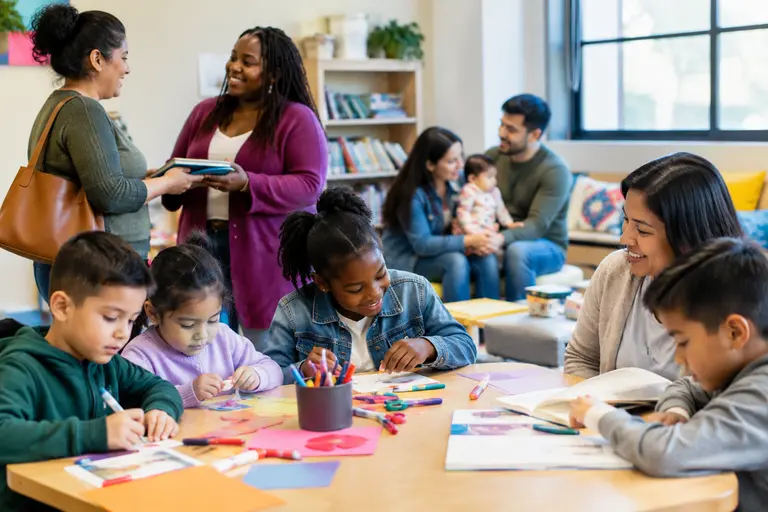
Parents do not have to do every part alone. A homeschool plan for a child with a disability may include public library programs, speech therapy, occupational therapy, tutoring, reading intervention, community recreation, adaptive sports, co-ops, or online classes. The parent’s role is to connect those pieces so the child has a coherent week rather than scattered services.
For writing and literacy support, families should check credentials, instructional approach, privacy practices, and whether a provider is willing to coordinate with the child’s learning goals. Some families also compare outside academic writing resources, including those available at top writing services, when older students need help understanding service options. Any outside support should strengthen skill development, not replace a student’s own work.
Keeping The Child Connected
Inclusive education is not only about services. It is also about belonging. Children with disabilities need chances to share interests, practice communication, build friendships, and participate in community life. A child who learns at home may still need book clubs, library visits, art classes, science groups, faith community activities, or accessible recreation.
Parents should watch for signs that the home plan is too isolated. If a child’s reading improves but social confidence drops, the plan needs adjustment. If therapies are scheduled but the child has no peer interaction, the week may be missing an essential developmental piece. Education planning should include academic, social, and emotional needs together.
Homeschool Disability Advocacy In Daily Practice
Homeschool disability advocacy works best when parents combine care with documentation. The most useful plans are specific, realistic, and flexible enough to change when evidence shows a child needs something different. A parent might begin with a daily reading lesson, a speech practice routine, a weekly library trip, and a monthly review of work samples. Over time, those records can show whether the plan is helping.
The practical goal is not to recreate public school at the kitchen table. It is to provide instruction that fits the child while preserving access to evaluation, community, and future options. Families should ask direct questions before withdrawal, keep records after withdrawal, and seek qualified help when rights or services are unclear.
For children with disabilities, homeschooling can offer flexibility, but flexibility alone is not enough. The child still deserves steady instruction, meaningful progress checks, and adults who can explain what support is being provided. Parent advocacy is strongest when it protects both the freedom to choose a setting and the child’s right to learn.
