
Drexel University’s new ALLIED Hub in Philadelphia aims to connect reading science, educational leadership, teacher development, and community resources to improve literacy outcomes across the United States.
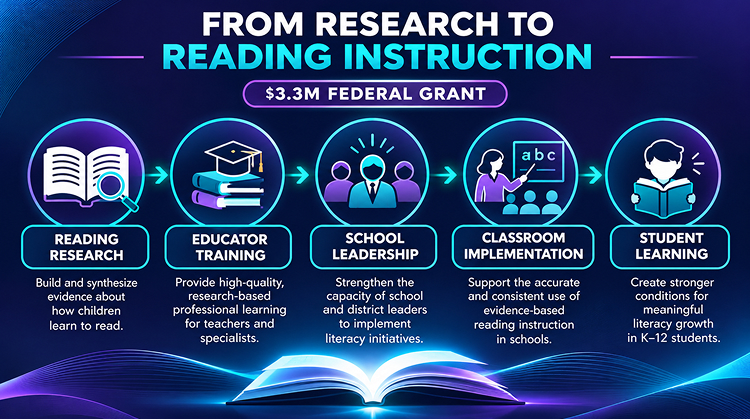
Philadelphia, Pennsylvania — Drexel University has received a $3.3 million federal education grant to support a new national literacy initiative designed to help schools turn reading research into effective classroom instruction.
The university announced the funding on October 13, 2026, ahead of the official launch of its Advocacy, Leadership, Learning, Implementation, Educational Policy and Data (ALLIED) Hub on October 15–17.
The grant comes from the U.S. Department of Education’s Supporting Effective Educator Development (SEED) program and will support research into advanced professional learning pathways for education leaders.
Located at Drexel’s University City campus in Philadelphia, the ALLIED Hub will serve as a collaborative center for literacy research, professional development, educational policy, and community engagement.
The initiative brings together reading scientists, school administrators, teachers, policymakers, literacy advocates, and families.
Led by literacy researcher Dr. Lori Severino, the hub aims to address a persistent challenge in American education: although researchers have identified effective approaches to teaching reading, many schools still struggle to implement and sustain those practices consistently.
The initiative also builds on a separate $1.4 million foundation grant announced in November 2025, which helped establish the hub. The two awards have different funding sources and purposes.
For educators and families, the central question is whether Drexel’s research-to-practice approach can help schools move beyond short-term literacy reforms and achieve measurable, lasting improvements in children’s reading skills. Drexel University+1
Drexel’s $3.3 Million Literacy Initiative: Key Facts
New federal grant
$3.3M
Earlier foundation grant
$1.4M
Hub launch
Oct. 2026
First doctoral cohort expected
Fall 2027
Sources: Drexel University announcements dated October 13, 2026, and November 10, 2025. The $3.3 million SEED award and $1.4 million foundation grant are separate funding commitments. Drexel University+1
| Initiative detail | Verified information |
|---|---|
| Institution | Drexel University, Philadelphia |
| Program | ALLIED Hub |
| Federal funding | $3.3 million SEED grant |
| Foundational funding | $1.4 million from the Wilson-O’Connor Family Foundation |
| Executive director | Dr. Lori Severino |
| Senior adviser | Dr. G. Reid Lyon |
| Physical location | 3401 Market Street, third floor, Philadelphia |
| Doctoral concentration | Expected fall 2027 |
| Post-master’s certificate | Expected spring 2028 |
The hub’s mission is national in scope, although its physical location is in Pennsylvania. Drexel has not announced a verified number of participating school districts or children who will benefit directly from the new federal award.
What Is Drexel University’s ALLIED Hub?
The ALLIED Hub is a literacy research and professional learning initiative designed to connect scientific evidence with the decisions made by schools, education leaders, and policymakers.
Its name stands for Advocacy, Leadership, Learning, Implementation, Educational Policy and Data.
Each component reflects an area that can influence whether effective reading instruction reaches students.
Research and learning
Making scientific evidence about reading development accessible to educators and school leaders.
Leadership and collaboration
Helping district administrators, teachers, researchers, and community organizations coordinate literacy improvement.
Implementation and evaluation
Supporting evidence-based instructional practices and examining whether they are producing intended results.
Policy and advocacy
Connecting literacy research with education policy and resources for families and communities.
Unlike a traditional research center focused primarily on publishing academic studies, the ALLIED Hub is intended to help educators apply research within their own schools and districts.
Its work will include professional learning, literacy tutoring and instruction, research activities, data analysis, and development of practical resources.
Some activities will take place at the Philadelphia facility, while others will occur virtually, through partnerships, and in schools and communities.
According to Drexel, the goal is to create a sustained connection between literacy research and real-world educational practice. Drexel University
Why Drexel Is Focusing on America’s Literacy Challenges
The ALLIED Hub launches against a backdrop of persistent reading difficulties among U.S. students.
According to the 2024 National Assessment of Educational Progress (NAEP), approximately 31% of fourth-grade students nationwide performed at or above the NAEP Proficient level in reading.
That means roughly 69% did not reach the assessment’s Proficient benchmark.
However, NAEP Proficient is a demanding national achievement standard and should not be confused with a state’s definition of grade-level proficiency.
The results nevertheless underscore the importance of improving foundational literacy instruction.
Why early reading skills matter
Reading development influences students’ ability to learn across academic subjects.
Children who struggle to decode words may spend so much effort identifying individual words that they have fewer cognitive resources available for understanding what they read.
As students progress through elementary school, they encounter increasingly complex texts in science, history, mathematics, and other subjects.
Strong literacy instruction therefore requires attention to multiple interconnected skills:
- Phonemic awareness and the sounds of spoken language.
- Phonics and relationships between letters and sounds.
- Accurate, fluent word reading.
- Vocabulary and oral language development.
- Background knowledge and reading comprehension.
- Writing and spelling.
Drexel’s initiative is built around the idea that schools need both reliable scientific knowledge and the organizational capacity to put that knowledge into practice.
Why research alone does not change classroom instruction
A school district may adopt an evidence-based reading curriculum without providing sufficient teacher training.
Another district may invest in professional development but lack the time, staffing, or instructional materials needed to apply what educators have learned.
Some schools may introduce promising interventions without establishing systems to monitor implementation or student progress.
These challenges illustrate the difference between knowing which instructional approaches are supported by research and creating conditions in which those approaches can succeed.
The ALLIED Hub is designed to help close that gap through educational leadership, implementation science, and data-informed decision-making. Drexel University+1
Drexel’s $3.3 Million Federal Grant Will Support Literacy Leadership Research
The $3.3 million Supporting Effective Educator Development grant is a central component of the ALLIED Hub’s expansion.
According to Drexel, the funding will support research connected to two new advanced education programs:
- A Doctor of Education concentration in Leadership in Literacy Science and Systems Change.
- A standalone Post-Master’s Certificate in Leadership in Literacy Science and Systems Change.
These programs are designed for professionals who want to lead evidence-based literacy improvement at the school, district, or organizational level.
The emphasis is not simply on teaching individual reading strategies. It is also on helping leaders build systems that support effective instruction across multiple classrooms and schools.
Why educational leadership is important for reading improvement
A principal or district administrator may influence literacy outcomes through decisions about teacher training, curriculum adoption, assessment schedules, staffing, and instructional resources.
For example, a district introducing structured literacy instruction must consider whether teachers have appropriate materials, whether reading specialists can support students who need intervention, and whether administrators understand how to evaluate implementation.
Without coordinated leadership, these efforts can become disconnected.
Drexel’s new programs are intended to prepare leaders to address such challenges using literacy science, organizational improvement strategies, and student learning data.
When will the new programs begin?
Drexel has announced the following anticipated schedule:
- October 2026 — ALLIED Hub launchThe university introduces the physical hub and its expanded literacy research initiative.
- Fall 2027 — Doctoral concentrationThe first cohort is expected to begin the Leadership in Literacy Science and Systems Change concentration within Drexel’s EdD program.
- Spring 2028 — Post-master’s certificateThe standalone certificate is expected to begin for professionals seeking specialized literacy leadership training without completing a doctorate.
The dates are planned program milestones, not evidence that the courses have already enrolled students or produced measurable outcomes.
Drexel’s October announcement does not specify the final number of participants to be funded through the SEED grant. Drexel University
Who Is Leading Drexel’s National Literacy Research Initiative?
The ALLIED Hub brings together university administrators, literacy researchers, educational leaders, and advocates.
Several individuals played prominent roles in the October 2026 launch.
| Name | Role |
|---|---|
| Dr. Lori Severino | Executive director of the ALLIED Hub |
| Dr. G. Reid Lyon | Senior adviser and reading researcher |
| Dr. Antonio Merlo | President of Drexel University |
| Dr. David S. Brown | Dean of Drexel’s College of Arts and Sciences |
| Barbara Wilson | Co-founder of Wilson Language Training |
| Cherelle L. Parker | Mayor of Philadelphia |
| Ameer Baraka | Author, actor, and dyslexia advocate |
Dr. Lori Severino: Connecting literacy research with school improvement
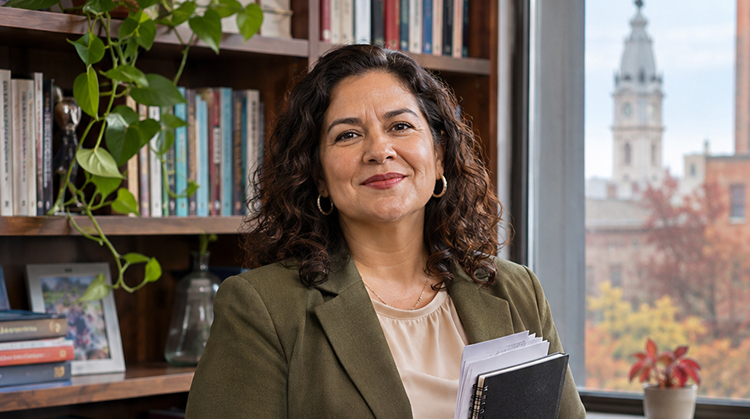
Dr. Lori Severino, a literacy researcher and former Drexel faculty member, serves as the hub’s executive director.
Her work focuses on helping schools and educational leaders translate literacy science into sustainable instructional practices.
In the university’s October announcement, Severino emphasized that professional learning must be connected to real challenges within schools and districts.
She also highlighted the importance of using data to guide improvement and ensuring that evidence-based practices receive sufficient support to continue over time.
Dr. G. Reid Lyon: A research perspective on reading development
Dr. G. Reid Lyon is a neuroscientist and former director of reading research at the National Institutes of Health’s National Institute of Child Health and Human Development.
As senior adviser to the ALLIED Hub, he contributes expertise in reading development, learning disorders, and educational research.
Lyon has emphasized the importance of establishing a common scientific foundation among educators, researchers, and policymakers.
That approach is especially relevant when schools are deciding how to identify reading difficulties, prepare teachers, and evaluate instructional methods.
Ameer Baraka: Bringing dyslexia advocacy into the discussion
Ameer Baraka, an actor, author, and dyslexia advocate, was selected as the keynote speaker for the hub’s October 15 launch reception.
His participation reflects the initiative’s interest in connecting academic research with the experiences of individuals and families affected by reading difficulties.
Dyslexia advocacy can help educators and policymakers understand the importance of early identification, appropriate instruction, and accessible literacy resources.
The inclusion of community voices also broadens the conversation beyond university researchers and school administrators. Drexel University+1
Drexel Launches Its Literacy Hub With Three Events in Philadelphia
The university organized three events between October 15 and October 17, 2026, to introduce the ALLIED Hub and connect participants from education, research, government, and the community.
October 15: Launch reception
The opening reception was scheduled at Loch Aerie Mansion in Malvern, Pennsylvania.
The event brought together literacy experts, educational leaders, community partners, university representatives, and supporters.
Ameer Baraka was announced as the keynote speaker.
October 16: Ribbon-cutting ceremony
The official ribbon-cutting was scheduled for 2 p.m. on October 16 at the hub’s new location:
3401 Market Street, third floor, Philadelphia, Pennsylvania.
Drexel announced that university leaders, Philadelphia Mayor Cherelle L. Parker, literacy experts, and community partners would participate.
The City of Philadelphia independently confirmed the mayor’s scheduled attendance and described the hub as a literacy resource center intended to provide educational resources, professional training, and support for reading and writing improvement. City of Philadelphia
October 17: Science of Reading Day Summit
The launch activities concluded with a scheduled Science of Reading Day Summit at Gerri C. LeBow Hall, 3220 Market Street, from 9 a.m. to 12:30 p.m.
The summit was designed for educators, families, reading specialists, school psychologists, instructional coaches, and literacy advocates.
Dr. G. Reid Lyon was announced as the keynote speaker.
The program emphasized professional learning, educator-led discussions, and opportunities to connect research with classroom practice.
These events marked the hub’s public introduction. They should not be interpreted as evidence that the initiative has already improved student literacy outcomes. Drexel University
How the ALLIED Hub Could Support Teachers and School Districts
The initiative is designed to address several practical challenges faced by educators.
1. Making reading research easier to understand
Academic studies can be difficult for teachers and administrators to interpret, especially when findings use specialized terminology or examine narrow research questions.
The hub intends to provide expert-curated resources that explain relevant evidence and its implications for instruction.
This could help school leaders evaluate professional development programs, literacy interventions, and curriculum materials more critically.
2. Supporting effective implementation
Adopting a research-supported instructional approach is only the first step.
Schools also need systems for teacher preparation, instructional coaching, assessment, and continuous improvement.
Implementation science examines how organizations introduce, maintain, and evaluate practices in real-world settings.
For literacy education, this can involve determining whether teachers receive sufficient training, whether instructional methods are being used as intended, and whether students are making progress.
3. Strengthening collaboration across school systems
Teachers, principals, district administrators, and policymakers often make decisions that influence the same students.
When these decisions are disconnected, schools may experience inconsistent expectations or overlapping initiatives.
The ALLIED Hub seeks to support more coordinated approaches to literacy improvement.
4. Using data to guide instructional decisions
Assessment data can help educators identify learning difficulties and determine whether interventions are effective.
However, data become useful only when schools interpret them appropriately and respond with meaningful instructional changes.
The hub plans to support research and data-related activities that help leaders evaluate literacy programs and improve implementation.
These are intended functions of the initiative. Drexel has not yet published an evaluation showing that the hub has increased reading achievement across participating school systems.
Why Structured Literacy and Dyslexia Research Are Part of the Initiative
One of the ALLIED Hub’s central areas of interest is structured literacy.
Structured literacy refers to approaches that explicitly and systematically teach the relationships among spoken language, written language, spelling, and reading.
Instruction may address phonemic awareness, phonics, decoding, morphology, vocabulary, syntax, and comprehension.
These skills are interconnected but require different teaching approaches depending on students’ developmental needs.
For example, a child who struggles to recognize unfamiliar written words may need explicit instruction in letter-sound relationships.
Another student who reads words accurately but has difficulty understanding complex passages may need additional support with vocabulary, sentence structure, and background knowledge.
Students with dyslexia may particularly benefit from carefully sequenced, explicit instruction in foundational word-reading skills.
The ALLIED Hub’s focus on literacy science and implementation could help educational leaders understand how to support these different needs.
However, the hub is not presented as a replacement for individualized evaluation, special education services, or direct intervention by qualified professionals.
Its broader role is to strengthen the systems that support effective reading instruction.
How Drexel Plans to Measure the Hub’s Impact
One of the most important aspects of the initiative is its stated commitment to data and evaluation.
Drexel’s earlier announcement described plans to develop systems for examining the effects of literacy leadership training and its relationship to student reading achievement.
A meaningful evaluation will need to consider several outcomes.
| Area | Questions for future evaluation |
|---|---|
| Professional learning | How many educators and leaders participate in hub-supported programs? |
| Leadership preparation | Do participants demonstrate stronger literacy and implementation knowledge? |
| Classroom practices | Are schools adopting evidence-based instruction consistently? |
| Student outcomes | Do reading assessments show sustained improvement? |
| Family engagement | Are parents and communities gaining access to useful literacy resources? |
| Sustainability | Can participating schools maintain effective practices over time? |
These are suggested evaluation questions, not a published list of final SEED grant performance targets.
Researchers will also need to distinguish between improvements associated with the hub and those influenced by other factors, such as district funding, curriculum changes, tutoring programs, and student demographics.
The strongest evidence would come from transparent evaluations that examine implementation quality and student outcomes over time.
What Drexel’s Literacy Hub Could Mean for Parents and Educators
For teachers, the ALLIED Hub may become a resource for understanding literacy research and applying evidence-based practices.
For school leaders, the new doctoral and certificate programs could provide specialized preparation for managing district-wide literacy improvement.
For families, the initiative’s resources and community partnerships may help make information about reading development, dyslexia, and effective instruction more accessible.
The hub’s public website, ALLIED Hub, already describes professional learning resources, expert discussions, and practical tools for literacy systems.
However, families should not assume that the $3.3 million grant provides direct tutoring to every child or guarantees free individualized services nationwide.
Drexel has described tutoring and instruction as potential activities within the hub’s physical and community-based work, but specific eligibility rules, service availability, and enrollment arrangements must be confirmed through the program.
Frequently Asked Questions
How much funding did Drexel University receive for its literacy hub?
Drexel announced a $3.3 million federal SEED grant in October 2026. This followed a separate $1.4 million grant from the Wilson-O’Connor Family Foundation announced in November 2025.
What is the ALLIED Hub?
The ALLIED Hub is Drexel University’s Advocacy, Leadership, Learning, Implementation, Educational Policy and Data initiative. It connects literacy research, professional learning, educational leadership, policy, and community resources.
Where is the ALLIED Hub located?
Its physical location is at 3401 Market Street, third floor, on Drexel University’s University City campus in Philadelphia, Pennsylvania.
Who leads the ALLIED Hub?
Dr. Lori Severino serves as executive director, while reading researcher Dr. G. Reid Lyon serves as a senior adviser.
What will the $3.3 million federal grant support?
According to Drexel, the grant supports research connected to a new doctoral concentration and post-master’s certificate focused on literacy science, educational leadership, and systems change.
When will Drexel’s literacy leadership programs begin?
The university expects its doctoral concentration to welcome its first cohort in fall 2027 and its post-master’s certificate to launch in spring 2028.
Will the ALLIED Hub provide reading support to children?
Drexel identifies literacy tutoring and instruction among the activities intended for the hub. However, specific service availability and eligibility requirements should be confirmed directly with the program.
Has the ALLIED Hub already improved national reading scores?
No national improvement attributable to the hub has been established. The initiative launched in October 2026, and its educational impact will require future evaluation.
Conclusion: Can Drexel Turn Literacy Research Into Lasting Classroom Change?
Drexel University’s $3.3 million federal literacy grant marks an important expansion of its effort to connect reading science with educational leadership and classroom practice.
Through the ALLIED Hub, the university is building a collaborative model that brings together researchers, teachers, school administrators, policymakers, and families.
Its planned doctoral concentration and post-master’s certificate will focus on preparing leaders who can apply literacy science and sustain evidence-based instructional improvement.
The initiative also recognizes that reading achievement is influenced by more than the selection of a curriculum or completion of a professional development course.
Schools need knowledgeable educators, effective leadership, appropriate resources, meaningful assessment, and ongoing support.
For Drexel, the next challenge will be demonstrating whether this coordinated approach leads to better instruction and measurable gains in student reading.
The hub’s long-term significance will depend not simply on the research it produces, but on how effectively that research improves learning opportunities for children.
