
Let’s talk about something important. Are we teaching kids to read or to love books?
It’s like choosing between learning scales or feeling the blues. One is technical, the other is emotional. The debate is often seen as a fight between “Science of Reading” and “Love of Reading.”
This debate is not real. It’s like saying an engine or the joy of driving is more important. You need both. Phonics and storytime work together, not against each other.
But we often make it seem like they’re enemies. Making reading a chore, like hello, punitive reading logs, turns kids off. It’s like forcing someone to swim without letting them enjoy the water.
True literacy is magical. It happens when skill and passion meet. Fostering a genuine habit is where that magic happens. It’s not about choosing one side. It’s about finding common ground.
Why Independence Matters for Reading Success
The idea of a self-taught reader is both romantic and flawed. We imagine a child alone, reading books by willpower. But, the truth is often a child looking confused at a page.
So, what is “independent reading”? It’s not about being alone with books. It’s about self-selection. It’s the freedom to choose your own reading path. This sparks real literacy motivation.
Now, let’s look at some hard facts. Studies show kids learn more from guided lessons than from reading alone. It’s like having a coach versus practicing alone. One helps you improve, the other might make mistakes worse.
Does this mean we should stop independent reading? No way. We just need to change how we think about it. Chasing a generic “love of reading” is like hoping someone falls in love with a language they can’t speak. It’s not the right approach.
Proficiency is key to motivation. You can’t love something you can’t do. Being good at reading is what fuels your love for it. Independence is important when you have the skills to back it up.
Let’s examine the different ways to improve reading skills. The table below shows why a balanced approach is best for reading success.
| Approach | Primary Focus | Impact on Literacy Motivation |
|---|---|---|
| Guided Instruction | Skill building, explicit teaching, feedback | High initial boost; builds essential competence that fuels later interest. |
| Solo Practice (Unsupported) | Time-on-task, self-discovery | Often low or negative; can lead to frustration without a base level of skill. |
| Balanced Independence | Guided choice within a scaffolded skill framework | Optimally high; combines the confidence from instruction with the ownership of choice. |
Notice the pattern? The middle row is a warning. Sending a kid off to read without support is neglect, not independence.
Motivation comes from small victories, not from being left alone. A child who decodes a tricky word or connects a book to their life is motivated.
So, reading independence is not the beginning. It’s the goal we aim for. It’s the reward for mastering reading skills. Our role is to teach the basics, so the child can read independently. That’s how we build lasting literacy motivation.
Creating a Reading-Friendly Environment
A kitchen with a padlocked fridge won’t inspire a chef. Why would a bare room inspire a reader? We often make learning spaces cold, like corporate lobbies. Then, we’re surprised when reading doesn’t catch on.
A reading-friendly space isn’t just about bean bags and fairy lights. It’s a curated ecosystem that shows reading is what we do here.
Think of the classroom. Rituals like partner shares and “Favorite Fridays” are more than activities. They show students that reading is cool. When a student talks about a book, it’s more powerful than any poster.

Teachers play a big role, too. They should show their love for books, not just classics. Talking about books like a movie trailer and doing voices during read-alouds is key. Your excitement can spark a love for reading in others.
But, books are essential. Source 2 says having books is non-negotiable. Without them, even the best environments fail. Community libraries and programs like First Book are vital. They supply the books needed for a reading revolution.
The home is also key. The best school reading culture can fade at the door if not supported at home. Smart at-home book tips can make a big difference. The goal is to make books easy to find and enjoy, like snacks.
| School Environment Element | Home Environment Element |
|---|---|
| Classroom “AmReading” Board | Family “What We’re Reading” List on the Fridge |
| Weekly Library Visits | Designated “Book Basket” in the Living Room |
| Teacher Book Talks | Parent “Book Commercials” at Dinner |
| Scheduled Partner Shares | Casual “What’s Your Book About?” Car Conversations |
The table shows how to bring school ideas into home life. It’s about making reading easy and visible.
Effective at-home book tips include:
- Strategic Placement: Books in bathrooms, cars, and next to the cereal box. Out of sight is out of mind.
- Ownership Matters: Let kids choose books, even if they’re not your favorites. This makes them more likely to read.
- Normalize Browsing: Make trips to libraries or bookstores regular and fun, not a chore.
- Ditch the Timer: Reading at home shouldn’t feel forced. Even a few minutes of real engagement is better than a long, forced hour.
This isn’t just about decorating. It’s about creating a space that encourages reading. Every book, every conversation, and every shared moment builds this ecosystem. It shows that reading is a way of life.
So, check your spaces and routines. Are books easy to find? Do you talk about them often? The best at-home book tips make reading a natural part of life. They help books fit into the everyday flow. A love for reading grows in a supportive environment.
Book Choice and Student Ownership
Imagine being a food critic stuck with only fast-food burgers. That’s what forced reading feels like. It’s like everyone eating the same unseasoned gruel. Fostering independent reading means giving students the freedom to choose.
Studies show that letting students pick their books boosts motivation. It’s a big change. When students choose books that interest them, they’re not just doing homework. They’re on a personal journey.
But, too much choice can be overwhelming. It’s like being in a huge bookstore without a guide. That’s where “wise orchestration” comes in. It’s like curating a menu for a special dinner, not leaving guests alone.
Rudine Sims Bishop’s “windows, mirrors, and sliding glass doors” framework is a great guide. A good classroom library offers books that reflect, show new worlds, or let students see themselves. It’s about giving students choices that fit all these categories.
Changing from a strict curriculum to a personalized book experience is a big step. The table below shows how it changes things.
| Aspect | The Forced Menu (Traditional Approach) | The Curated Feast (Orchestrated Choice) |
|---|---|---|
| Philosophy | One size fits all. Compliance is the goal. | Differentiated engagement. Personal connection is the goal. |
| Student Role | Passive consumer. They eat what they’re served. | Active participant. They choose from a thoughtful selection. |
| Outcome for Engagement | Often reluctant, extrinsic (for the grade). | Intrinsic, driven by curiosity and personal relevance. |
| Long-term Goal | Coverage of specific texts. | Developing lifelong, discerning readers. |
How do you link choice to deeper learning? Connect it to inquiry. Ask questions like “How do societies rebuild after collapse?” Then offer a list of books that let students explore the theme in their own way.
The goal isn’t just to let kids pick any book. It’s to teach them to be discerning diners at the literary feast. They learn to choose books that truly interest them. That’s how choice becomes the foundation of reading independence.
School Library and Digital Resource Tips
If literacy motivation were a city, the school library would be its power grid. It’s essential, often overlooked, and key to everything else. A gym without weights doesn’t build muscle. A school without a lively library doesn’t build readers.
Source 2’s research is blunt: more and better books in communities are a must. Classroom and school libraries, public libraries, and book programs are not just extras. They are the foundation. This is the simplest, most effective way to boost reading.
To make the library a hub of literacy motivation, first, celebrate the librarian. They are more than just book checkers. They match kids with books that spark their interests. They are the ultimate matchmakers, but human.
Second, make your library inviting. Are books easy to find? Is the space comfortable? The goal is to make every student want to explore. A well-chosen collection is more powerful than a huge number of books.
Digital resources are not just replacements for books. They are tools for expanding and personalizing reading. For avid readers, digital libraries like Sora or Epic! are endless. For hesitant readers, audiobooks can open up new worlds.
Here’s the practical plan:
- Integrate, Don’t Isolate: Mix digital and physical books. Teach students to find both.
- Personalize Discovery: Use platforms that suggest books based on what you’ve read before.
- Democratize Access: Make sure every student can use digital resources at home. This removes excuses for not reading.
- Train the Guides: Make librarians and teachers experts in both physical and digital books.
This effort is about making book access a basic right, not a privilege. When we do this, we spark a chain reaction. Kids find stories that reflect their lives. They discover new worlds. Literacy motivation becomes real, like a kid lost in a book they chose.
The data from Source 2 and the equity argument from Source 3 show the same thing. Investing in libraries and digital tools is essential. It’s not just about better test scores. It’s about minds that are truly engaged.
Reading Challenges, Journals, and Logs
Reading logs can feel like homework. It’s time to break free from this mindset. Instead of just tracking time, let’s make reading an adventure. We want to encourage reading without feeling like we’re being watched.
Timed logs can make reading feel like a chore. They tell us we’re not trusted to enjoy it. But, we can create better ways to track progress. We want to celebrate the journey, not just the end goal.
Forget about spreadsheets. Think about scrapbooks. Here are some better ways to track reading:
- Weekly Goals Over Daily Minutes: Aim to finish two chapters or read three different types of texts. This helps with planning and gives more freedom.
- Quick Creative Responses: Write one sentence about what you enjoyed most. This captures your thoughts, not just how long you read.
- Reading Partners: Read with a friend or family member. This makes reading a fun, shared activity.
- Monthly Bingo Challenges: Create a bingo board with fun challenges like reading a book with a blue cover. It makes reading exciting.
- The Yearly Reading Pledge: Make a simple promise to be a reader. This is more meaningful than tracking every minute.
We’re moving from just following rules to exploring new worlds. A visual journal where kids draw scenes or write letters to authors makes reading personal. It’s about uncovering new connections and meanings.
Let’s look at the difference between old and new ways of reading.
| The Old School: Reading as Chore | The New Wave: Reading as Discovery | The Core Difference |
|---|---|---|
| Timed, parent-signed logs | Visual journals & creative responses | Auditing vs. Archiving |
| Mandatory daily minutes | Flexible weekly goals & bingo challenges | Rigid Schedule vs. Playful Framework |
| Solitary, silent task | Social reading partners & discussions | Isolation vs. Community |
| Focus on quantity (pages/minutes) | Focus on quality (reactions, connections) | Metric vs. Meaning |
The best at-home book tips focus on desire, not rules. A bingo board creates excitement. A reading partner adds accountability. A yearly pledge makes reading a part of who you are. These methods offer structure without feeling trapped.
We’re not just tracking time. We’re creating lifelong readers. Ditch the clipboard and give them a treasure map instead. The right reading challenges and journals create unforgettable experiences.
Parent and Teacher Collaboration
The secret to fostering independent reading isn’t a fancy curriculum. It’s the partnership between teacher and parent. School is like a lecture hall, and home is the place where learning comes alive. But often, we leave it up to parents to make it happen without much help.
Intentional partnership is key. We must be realistic about daily reading habits at home. Trying to force a strict reading schedule can lead to guilt and resistance. The goal is to make reading a positive and consistent part of life.
Programs like Project FLAME showed how effective this partnership can be. They didn’t just teach kids; they involved the whole family. The data shows that making reading a family affair is essential. It’s not enough to just ask parents to sign a reading log. We need to give them the tools and confidence to join the effort.
So, what does this partnership do? It focuses on simple, enjoyable ways to make reading a pleasure:
- Book Chats Over Dinner: Ask questions that spark imagination, like “Which character would you want as a friend?”
- Modeling the Habit: Show kids that reading is fun by reading yourself, whether it’s a novel or a recipe.
- Creating a “Book Nook”: Set up a cozy reading area to show that reading is valued and enjoyable.
- Co-Designing Challenges: Work together to set fun, family-wide reading goals that everyone can get excited about.
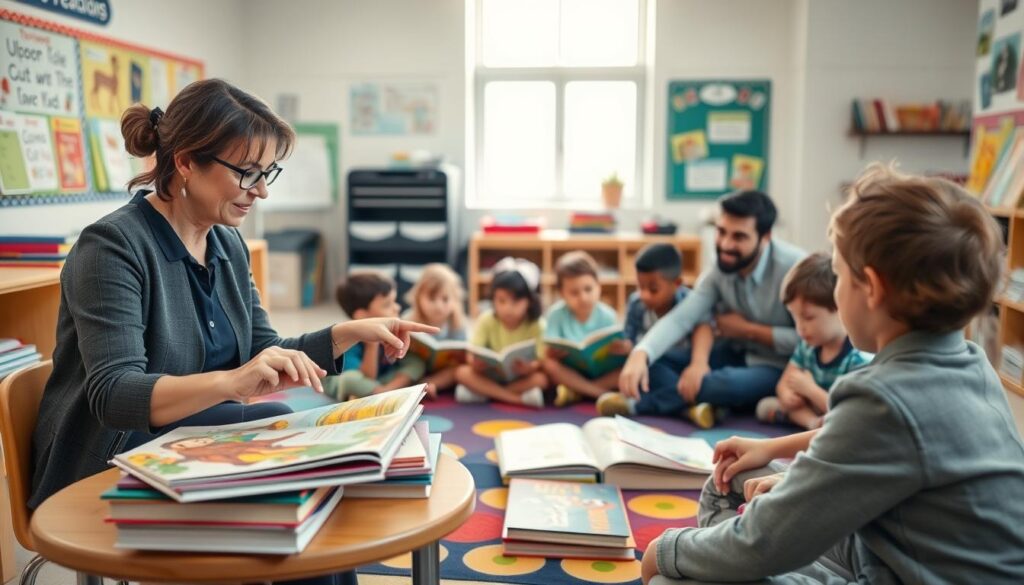
This change from reporting to relating makes a big difference. It creates a “coalition of the willing.” Teachers provide the plan, and parents bring it to life with their own touch. Good communication between teachers and parents is what holds it all together.
To see the difference, let’s compare the old way to the new partnership.
| Old School Method | Coalition Tactic |
|---|---|
| Requiring a parent signature on a reading log. | Inviting parents to share a one-sentence “book review” from home. |
| Sending home generic “read for 20 minutes” notes. | Providing conversation starters or question prompts related to the child’s current book. |
| Assuming reading habits automatically transfer home. | Explicitly discussing home reading routines during parent-teacher conferences. |
| Viewing the home as a separate, unmanageable variable. | Celebrating family literacy activities (like library trips) as part of the curriculum. |
| Focusing solely on student accountability. | Creating shared accountability for fostering independent reading as a joyful, shared value. |
With this partnership, you’re no longer alone. You’re working together to make reading exciting. This is the magic of true partnership. It makes the effort to promote reading feel less like a chore and more like a shared journey.
Success Stories
Move over, abstract pedagogy. The real proof is in the buzzing classroom where kids are hooked on books. Let’s look at a few case studies where literacy motivation turned into joyful learning. These are real success stories, not fairy tales.
Consider the “Reading Web” activity. Students were mapping connections between novels like Hatchet and The Hobbit. It was a collaborative effort, not a quiet worksheet. They set simple weekly reading goals, turning reading into detective work. The engagement metric was the energy in the room, not just test scores.
In Chicago, a father-son book club tackled literacy motivation by sharing stories. It was about bonding over books, not just reading levels. Teachers also started lunchtime book discussions, creating a voluntary literary salon. Kids and parents chose to attend, showing real interest.
Lesley Davidson’s approach is a perfect example. She combined the Science of Reading with a love for stories. Imagine learning about word parts in a way that connects to a character’s journey. This shows that learning and passion can go hand in hand.
So, what do these success stories have in common? They turned theory into tangible experiences. They used social connection, choice, and curiosity to boost literacy motivation. The proof is in the doing, and these are your guides.
Conclusion
What’s the final verdict on building lifelong readers? We’ve been asking the wrong question.
The goal isn’t to choose between phonics and fun. It’s to master the blend. The best at-home book tips focus on this mix. Let reading be a practiced skill and a private joy.
This isn’t just philosophical musing. Solid research, like the data compiled by the American Library Association, shows a clear link. Independent reading minutes lead to better vocabulary and test scores. Kids who read more, achieve more. It’s that simple.
Our mission is to create competent, curious, and slightly skeptical readers. The spark doesn’t come from leaving a child alone with a book. It comes from the guide who points to the map and whispers about the dragons.
So, reject the false divide. Weave the instruction and the intrigue together. Consider this your master class in at-home book tips. The sage’s work is done when the student chooses the next chapter on their own.
