
High School Voter Education gives California social studies teachers a clear opportunity to connect classroom learning with the civic systems students will soon use as adults. The state’s High School Voter Education Weeks are held twice each year, and the program gives schools a practical structure for teaching voter pre-registration, election participation, and informed civic habits without turning the classroom into a campaign space.
For educators, the strength of the program is its direct connection to real public processes. Students can read official election materials, practice asking evidence-based questions, and learn the difference between registration, pre-registration, mock voting, and civic recognition. Those distinctions matter because civic literacy is not only about knowing terms; it is about understanding how public participation works and where reliable information comes from.
High School Voter Education Weeks At A Glance
California designates High School Voter Education Weeks during the last two full weeks of April and September each year, according to the state’s official high school programs page from the California Secretary of State high school programs. The same state resource identifies related student opportunities, including voter pre-registration for eligible 16- and 17-year-olds and the California Student Mock Election scheduled for October 6, 2026.
What High School Voter Education Covers
High School Voter Education is best understood as a set of civic learning activities that schools can adapt to their calendars. A government class might study who is eligible to register. An English language arts class might read and evaluate official election language. A student leadership group might help share nonpartisan reminders about pre-registration deadlines and campus resources.
The program also offers a useful way to teach source evaluation. Students often encounter election information through social media, family conversation, community flyers, and online searches. A classroom activity can ask students to compare those channels with official state and county election information. The goal is not to tell students what to think politically. The goal is to help them identify accurate public information, ask clarifying questions, and understand the steps that connect eligibility with participation.
Why The Biannual Schedule Helps Schools
A twice-yearly schedule gives teachers and campus teams more than one entry point. September can fit naturally into the opening months of a civics, government, or U.S. history course, when teachers are establishing vocabulary and classroom norms for discussion. April can serve as a spring review period, especially for students who have gained more background knowledge during the school year.
The repeating schedule also helps schools avoid treating civic participation as a one-day announcement. A campus can plan short activities across several days: one lesson on pre-registration, one reading of official election information, one discussion about local election offices, and one student reflection about civic responsibilities. Small, repeated experiences are often more manageable for teachers than a single large event.
Classroom Planning For Civic Participation
During High School Voter Education, schools can keep instruction practical by focusing on what students are legally and developmentally ready to do. Eligible 16- and 17-year-old students can pre-register to vote in California, and that pre-registration becomes an active registration when they turn 18 if they meet eligibility requirements. For many students, that is the first time a government process feels connected to their own timeline.
Pre-Registration Without Pressure
Pre-registration lessons should be clear, calm, and nonpartisan. Teachers can explain vocabulary such as eligibility, residence, registration status, political party preference, and voter information. Students should know where official information is located, but no student should be pressured to disclose a political viewpoint or family voting practice.
A literacy-focused approach works well here. Teachers can provide a short set of official definitions and ask students to paraphrase them in plain language. Students can then identify which words might confuse a first-time voter and create classroom questions for further clarification. This supports reading comprehension while keeping the activity grounded in civic information rather than opinion.
Mock Elections And Campus Roles
The California Student Mock Election gives schools a hands-on structure for discussing how voting works. A mock election is not the same as a real election, and teachers should make that distinction explicit. Its value is procedural: students can practice reading ballot-style information, following directions, respecting privacy, and reflecting on how election systems depend on preparation and trust.
Campus roles can also build student ownership. A teacher might assign students to prepare a neutral vocabulary station, organize classroom materials, or develop questions for a county election official visit. If a school works with county election officials, as described in state program materials, educators should frame the partnership around public service, accuracy, and student understanding.
Connecting Social Studies, Literacy, And Community
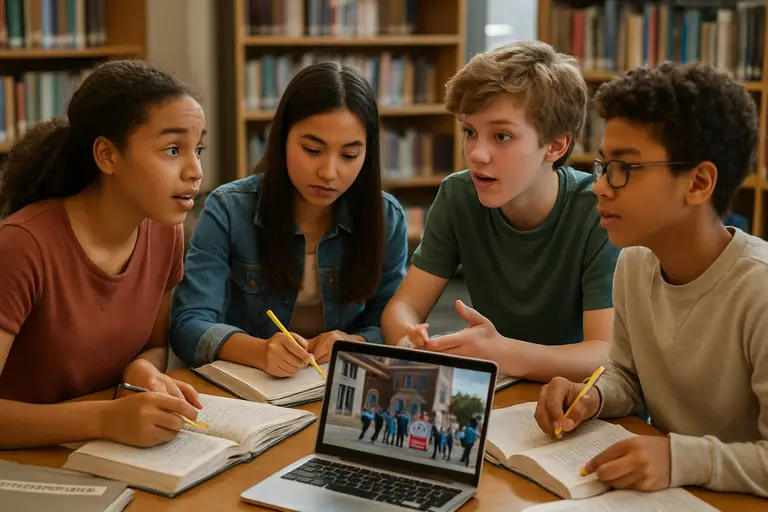
Civic learning is strongest when students can read, speak, listen, and write about public processes with care. That makes the program a natural fit for cross-curricular planning. Social studies teachers bring the government content. English teachers bring source analysis and argument writing. Library staff can help students identify official public information. Student leadership advisers can help students share reminders in a respectful way.
Reading Official Election Information
Students need practice reading public documents that are written for adults. A classroom can begin with short excerpts from official election materials, then ask students to identify audience, purpose, key terms, and action steps. This keeps the lesson accessible while building a skill students can use outside school.
The California Department of Education has connected the September 15–26, 2025 High School Voter Education Weeks with civic education resources, the State Seal of Civic Engagement, and the History–Social Science Framework’s emphasis on civic engagement in a California Department of Education letter. Those connections give teachers a helpful reason to treat civic participation as part of instruction, not as an extra activity competing with the curriculum.
Family And Community Partnerships
Family communication should be simple and factual. A school message might explain the dates, describe pre-registration eligibility, name the official state resource, and invite families to discuss civic responsibilities at home. Schools should avoid assuming that all families have the same voting history or comfort level with public institutions. Clear language helps more families participate in the conversation.
Community connections can also support civic habits. A school might invite students to notice how public decision-making affects libraries, parks, arts programs, and local meeting spaces. For those who want to explore how local participation extends into areas like arts and civic life, Wakefield Rep is a related site that enriches the broader network.
- Use official state and county election sources for dates, eligibility, and procedures.
- Keep classroom activities nonpartisan and focused on civic process.
- Pair voter vocabulary with reading, writing, and discussion tasks.
- Invite student questions without requiring political disclosure.
- Connect the program to existing social studies standards and school civic goals.
High School Voter Education As Classroom Practice
High School Voter Education works best when teachers treat it as steady civic literacy rather than a special announcement. Students need time to learn the terms, examine the steps, and practice respectful discussion. They also need adults who can separate civic participation from political persuasion and who can point them toward official information when questions arise.
For California schools, the twice-yearly schedule offers a reasonable planning rhythm. September can introduce civic identity and participation early in the school year. April can revisit those ideas with more background knowledge and stronger discussion skills. The student mock election can give a concrete setting for procedure, reflection, and classroom conversation.
The practical measure for educators is not whether every student leaves class with the same opinion. That would be the wrong goal. A stronger classroom goal is that students understand what pre-registration means, know where to find reliable election information, can explain why participation processes matter, and can discuss civic questions with evidence and respect. Those are habits worth teaching before students cast their first real ballot.
