
Family Literacy Week offered homeschool families, libraries, adult education programs, and local civic groups a practical way to connect literacy with community life during September 13–19, 2026. Since that week has already passed as of October 31, 2026, the best use now is reflection: What worked, who was reached, and how can the next September effort become more useful for adults and children?
As a homeschooling advocate, I see this observance as more than a calendar note. It is a ready-made social studies lesson about civic recognition, public policy, local services, work skills, language access, and family responsibility. Parents can use it to help children understand that literacy is not only a school subject. It affects voting information, job applications, health forms, library use, parent-teacher communication, and the confidence adults bring into public spaces.
Why Family Literacy Week Belongs In Social Studies
Set A Family Literacy Week Question
A good homeschool social studies activity starts with a question. For this topic, try: “How does adult literacy affect a community?” That question keeps the work practical and prevents the lesson from turning into a slogan. Students can study how public agencies describe adult education, why state leaders issue proclamations, and how local programs connect reading, English learning, numeracy, and high school completion.
The 2026 Senate resolution text cited recent adult skills data, including that 28% of U.S. adults performed at Level 1 or below in literacy and 34% performed at that level or below in numeracy. It also referred to 2023 American Community Survey data showing that nearly 21 million U.S. adults lacked a high school diploma or equivalent, and more than 20 million had limited English proficiency, according to S. Res. 863. Those numbers give families a serious starting point without making claims beyond the public record.
Connect Civic Recognition To Local Needs
Students can compare national recognition with local conditions. A family might ask the public library what adult learning referrals it keeps at the desk, or ask a community college which adult education services are public information. Homeschool co-ops can invite a librarian or adult education coordinator to explain how families can volunteer, donate books appropriately, or share program information without speaking for the program.
This is also a chance to teach respectful language. Adults who seek literacy help are not a project for children to “fix.” They are neighbors with goals, work schedules, family duties, and strengths. Children can learn that civic engagement means listening first, using verified information, and protecting dignity.
What The 2026 Recognition Shows
Read Public Resolutions Like Primary Sources
One useful social studies exercise is to treat proclamations and resolutions as primary sources. Ask students to identify the problem being described, the data cited, the public values named, and the action implied. A resolution does not, by itself, run a class, hire tutors, or remove transportation barriers. It does something more limited but still useful: it gives public attention to an issue that local groups can build on.
Families can create a simple document study. Print or display a short excerpt, then ask: Who issued this? What facts are included? What groups are mentioned? What is missing? This helps children see the difference between recognition and service delivery. It also trains them to read public language with care, a core social studies skill.
Use State Proclamations Carefully
State recognition can make the issue feel close to home. For example, Michigan’s 2026 proclamation recognized September 13–19, 2026, as Adult Education and Family Literacy Week and stated that more than 500,000 working-age Michiganders ages 18–64 did not have a high school diploma or equivalent, according to the governor’s Michigan proclamation. Families outside Michigan should not copy that number into local materials as if it applied everywhere. Instead, they can use the proclamation as a model for how states frame the issue.
For homeschoolers, this distinction matters. Children need to learn that public data has a place, a date, and a scope. A state statistic can support a state discussion. A national statistic can frame national need. A local planning effort should still ask local providers what they are seeing and what kind of help is appropriate.
Practical Community Engagement Strategies
Plan With Partners Before Planning Events
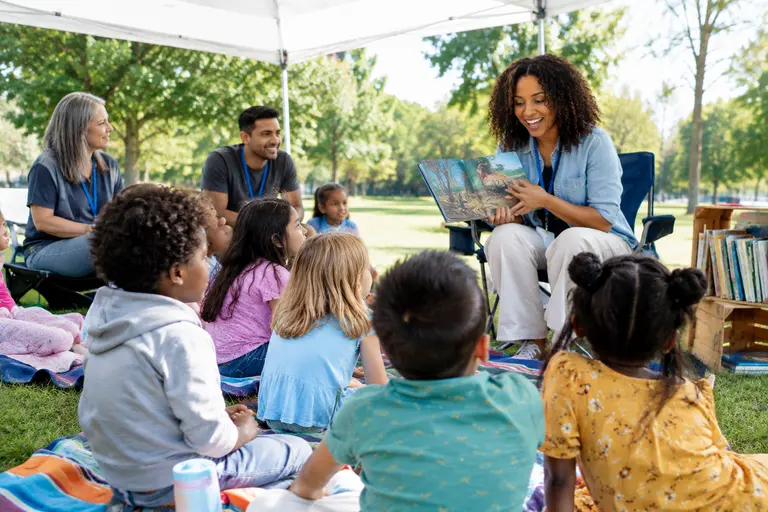
Community engagement works best when families start by asking existing programs what is helpful. A homeschool group may want to host a book drive, but a program may need bus passes, childcare volunteers, classroom supplies, or help spreading accurate referral information. The respectful question is: “What support would fit your learners and your capacity?”
Parents can also connect literacy to the wider civic life of a town. Libraries, schools, community colleges, faith-based service groups, arts groups, and local newspapers often reach different audiences. Even community arts organizations, such as those found through collaborations with Wakefield Rep, can remind families that public learning happens through many local gathering places, not only through formal classrooms.
For readers who want to connect adult learning with funding and public priorities, this related Leap Year Publishing article on local education priorities offers a useful companion topic for family discussion.
Make The Week Useful For Adults
The most helpful projects are clear, modest, and connected to real services. A homeschool family does not need to create an adult education program. Instead, it can help neighbors find the programs that already exist, support a library display with approved materials, or organize a civics night where students explain how proclamations are written and adults share what barriers learners face.
- Ask a local adult education provider what information families may share publicly.
- Create a one-page resource sheet using only verified program names, phone numbers, and eligibility details.
- Host a homeschool discussion on how literacy affects work, health, voting information, and family routines.
- Invite a librarian to explain how adults can get a library card, use computers, or find English learning materials.
- After the event, record what was done, who participated, and what should be improved next September.
Measurement should stay honest. Families can count attendance, materials distributed, partner organizations contacted, or volunteer hours offered. They should not claim that one event raised reading levels unless a qualified program measured that result. Clear records build trust and help children see that civic work is both compassionate and accountable.
Family Literacy Week As A Social Studies Project
Treat Family Literacy Week as a yearly civic case study. In early September, families can read a public recognition document, map local adult learning resources, and ask one provider what support is welcome. After the week ends, students can write a short reflection: What need did the public documents identify? What did local partners say? What action was realistic for our family or co-op?
If your homeschool program includes civics, economics, geography, or community history, this topic fits naturally. Students can map transit access to learning sites, discuss how high school equivalency connects to work opportunities, study how English learning affects parent participation in schools, or interview a librarian about common information needs. Each activity ties literacy to real public life.
The strongest lesson is simple: adult education and family learning belong together. Children benefit when adults have access to reading support, English learning, numeracy instruction, and clear community information. Adults benefit when families and local institutions treat learning with respect. That is why this observance remains a strong social studies project for homeschoolers, not as a one-week celebration alone, but as a yearly practice in informed, neighborly engagement.
