
Michigan library calendars in late August show why summer reading works best when books are surrounded by community activity. A reading log can help children track progress, but a library visit becomes stronger when it includes story time, STEAM activities, arts and crafts, meal access, technology help, and family events that give books a real place in daily life. For parents, teachers, and homeschool families, the lesson is direct: summer reading does not have to stand alone. It becomes more durable when children connect reading with people, places, routines, and local experiences.
A July 2026 roundup from Big Rapids News listed summer programs across libraries in Mecosta and Osceola counties, Michigan, including Summer Reading Programs, preschool story hours, STEAM events, arts and crafts, technology help sessions, and Gather 2 Grow Summer Meals at several locations. The article noted that many events are free, some require registration, and families should check library websites or contact librarians for current details. That mix makes the region a useful case study for how public libraries turn summer reading into community learning rather than a private task completed at home.
Why Library Events Give Summer Reading A Stronger Routine

Children often need more than a book list to keep reading through the summer. They need a reason to return to books, a place to browse, adults who can suggest age-appropriate titles, and activities that make the library feel familiar. Mecosta and Osceola County library events show how that routine can form through repeated visits, not one-time reminders.
The Big Rapids News roundup described library programming that stretches across multiple communities, with events for different age groups and needs. Big Rapids and Morton Township libraries were listed with tech help sessions, while other local libraries offered preschool story hours, STEAM events, arts and crafts, and summer reading activities. Tamarack District Library was listed with programs such as a cardmaking class, Touch a Truck experience, and live alligator encounter.
Those details matter for reading development. A child may visit the library for a truck event, animal program, craft session, or meal site, then leave with a book. A parent may come for tech help and discover a child’s calendar. A homeschool family may use an arts-and-crafts session as the entry point for read-alouds, nonfiction, writing prompts, or science vocabulary.
The structure connects with Leap Year Publishing’s earlier discussion of the National Year of Reading, where print access, family reading habits, and community support work together. Summer reading becomes stronger when it has a social setting and a practical reason to continue.
How Michigan’s Summer Reading Framework Supports Families
Michigan’s statewide library system gives this local programming a broader context. The Library of Michigan says the Summer Reading Program at public libraries encourages children, youth, and families to read and helps children maintain reading skills. The page states that the Library of Michigan is a member of the Collaborative Summer Library Program, which supports shared summer reading resources for public libraries.
That statewide framing helps explain why the local library calendar matters. Summer reading is not only a list of titles. It is a network of branches, librarians, parents, caregivers, children, meal providers, educators, and community partners. When children return weekly for a story hour, craft program, summer reading challenge, or family event, they receive repeated exposure to books and reading spaces.
The Library of Michigan page also points to the Summer Food Service Program, noting that free meals meeting federal nutrition guidelines are provided to children at approved sites in areas with significant concentrations of low-income children. It frames the food program as a possible resource for libraries seeking to serve underserved children and encourage families to attend summer programs or reading activities.
That connection is useful for parents and educators. Reading habits can be affected by transportation, food access, adult schedules, child care needs, and whether a program feels welcoming. A library that pairs reading with meals, crafts, and community services removes friction for families who might otherwise miss summer learning opportunities.
Why Books Work Better When Children Can Do Something With Them
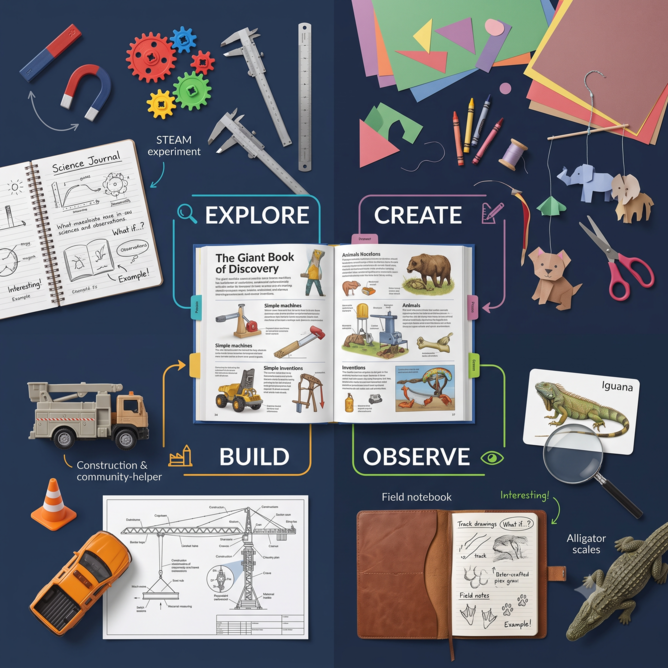
The strongest summer reading programs give children something to do with the ideas they encounter in books. A preschool story hour can connect language, rhythm, pictures, songs, and social attention. A STEAM event can connect nonfiction reading to experiments and observation. An arts-and-crafts program can turn a picture book into drawing, coloring, design, or storytelling. A Touch a Truck event can lead to books about construction, public works, mechanics, city services, or community helpers.
The American Library Association’s Association for Library Service to Children released 2026 Summer Reading Lists with book titles and digital media options meant to keep children reading and exploring throughout the summer. The lists are divided by birth-preschool, grades K-2, grades 3-5, and grades 6-8, and the page says they are free to download and share.
Those lists become more practical when paired with local programming. A parent can take a child to a preschool story hour, then choose a picture book from the birth-preschool or K-2 list. A fifth grader who enjoys a STEAM event can choose a nonfiction title or a science-themed novel. A middle school student who resists assigned reading may respond better to a digital media recommendation, graphic novel, or book connected to a real event they attended.
| Community Program Type | Reading Connection | Parent Or Educator Use |
|---|---|---|
| Preschool Story Hour | Oral language, vocabulary, print awareness | Repeat songs, reread the book, ask picture-based questions |
| STEAM Event | Science terms, observation, problem-solving | Pair the activity with nonfiction or experiment journals |
| Arts And Crafts | Visual literacy, sequencing, creative response | Ask children to describe the steps or retell the story |
| Summer Meals Site | Access, routine, family participation | Build a weekly library visit around meal and book pickup |
| Tech Help Or Digital Access | Research, eBooks, audiobooks, accessibility | Help older students find digital reading formats |
This approach protects reading from feeling isolated. The child is not simply told to read. The child sees reading connected to making, asking, listening, moving, building, eating, visiting, and sharing.
How Local Library Calendars Help Parents Plan Late Summer
Late July can be a difficult point in the summer. The first burst of reading motivation may have faded, school-year materials may not have arrived, and families may be balancing camps, travel, work schedules, and heat. Local library calendars give parents a way to restart the rhythm before August.
The Mecosta County Visitors Bureau lists a Big Rapids Community Library Summer Reading Program running from July 1 through September 30, 2026, at 426 S. Michigan Ave. in Big Rapids. The event description says the program includes stories, activities, books, and opportunities for readers of all ages to stay engaged through the summer.
Morton Township Library’s summer reading page says children from toddlers to age 18 are invited to join its 2026 Summer Reading Challenge from June 17 to July 30, with finishers receiving a prize bag on or after July 29. The library frames the program as a summer of reading, special events, and fun.
Parents can use these dates as planning anchors. A family that has not started a reading routine can still join a late-summer event. A child who completed one challenge can begin a second, smaller goal. A homeschool parent can use August to connect library books with science, local history, art, writing, or oral narration before formal lessons resume.
The practical step is to check the current calendar. Library events can change, spaces may be limited, and some programs require registration. Families should confirm dates, age ranges, accessibility details, meal availability, and whether a library card is required for borrowing or digital resources.
Why Community Programs Help Different Kinds Of Readers

A community-centered summer reading plan is especially useful because children do not all read for the same reasons. Some children love stories but avoid independent reading. Some are confident readers but need richer discussion. Some prefer facts, animals, sports, machines, art, or local history. Some need audiobooks, large print, graphic formats, or shorter books to rebuild confidence.
Library events create more ways to read. A child who attends a live animal program may want books about reptiles. A child who attends a craft class may want books about drawing or design. A teen who helps a younger sibling at story time may need a different recommendation from the young child. A caregiver who attends a meal program may discover take-home books, a library card, or digital resources.
The Association for Library Service to Children’s 2026 lists give families a grade-band starting point, but librarians can personalize that starting point. A grade 3-5 list can still be too hard, too easy, or the wrong topic for a specific child. Local librarians can help match the book to the reader’s stamina, interests, and emotional readiness.
That flexibility is one reason library programs can complement school and homeschool plans. The library does not need to replace instruction. It can supply reading volume, choice, public space, peer energy, adult guidance, and a broader range of formats than many families can maintain at home.
What Parents Should Check Before Choosing A Program
Michigan’s library events show that summer reading works best when families treat the library as a learning hub, not a book warehouse. Still, parents should verify program details before building a plan around any event. The Big Rapids News roundup noted that most events are free, some require registration, and the Walton Erickson Public Library was closed for repairs from July 13-27, which shows why current details matter.
Families should check five things before the next visit: the event date, the target age group, registration rules, whether meals or supplies are included, and which books or formats can extend the activity at home. Parents can ask librarians for one easy book, one stretch book, and one interest-based book after each event. That small habit turns community programming into a reading pathway.
The larger lesson from Mecosta and Osceola County is clear. Summer reading holds better when books are surrounded by people, programs, and practical reasons to return. A child may arrive for crafts, meals, technology help, story time, or a live animal event. The reading benefit grows when the family leaves with a book, talks about it, returns the next week, and makes the library part of summer life.
