
Pennsylvania is investing in evidence-based reading instruction, teacher training, and early literacy screening as 54 schools across 21 counties prepare for new statewide requirements. The $10 million initiative could reshape how elementary students learn to read.
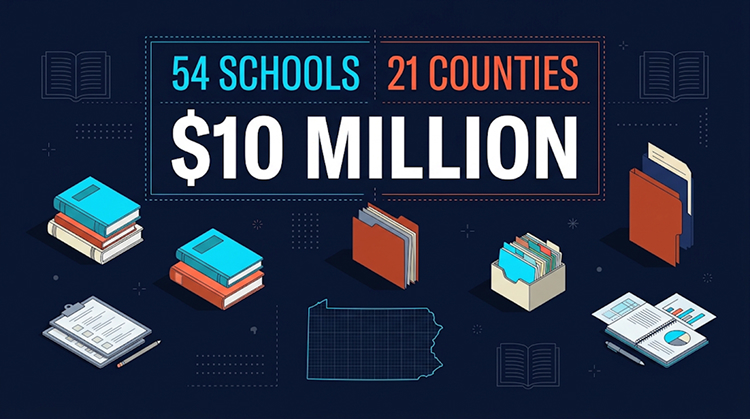
Pennsylvania is taking another significant step toward improving childhood reading achievement. On October 19, 2026, the Pennsylvania Department of Education (PDE) announced $10 million in structured literacy grants for 54 schools across 21 counties, providing funding for instructional materials, educator professional development, reading assessments, and schoolwide literacy support.
The announcement, made by Pennsylvania Secretary of Education Dr. Carrie Rowe, comes as school districts prepare to meet new requirements under the state’s evidence-based reading instruction laws.
For elementary teachers, school administrators, and families, the initiative represents more than a curriculum change. It is part of a broader effort to establish consistent, research-informed reading instruction and identify children who need additional support before reading difficulties become more serious.
The funding is intended to help schools build sustainable literacy systems, rather than simply purchase new textbooks.
Pennsylvania’s $10 Million Structured Literacy Investment: Key Facts
Total grant funding
$10 million
Schools receiving grants
54
Pennsylvania counties
21
Curriculum compliance deadline
2027–28
The grants support school districts and eligible public school entities as they transition toward structured literacy instruction. According to PDE, approved spending can include curriculum materials, K–3 reading screeners, professional development, literacy coaching, and intervention planning.
The statewide requirements apply beyond the schools receiving these particular grants. The awards are one funding mechanism intended to help participating schools prepare for implementation.
What Is Structured Literacy, and Why Is Pennsylvania Investing in It?
Structured literacy is an approach to teaching reading and writing through explicit, systematic, and cumulative instruction.
Instead of assuming children will independently discover how written language works, teachers directly explain important relationships between sounds, letters, words, and meaning. Students practice these skills in a carefully organized sequence, with instruction adjusted according to their progress.
Structured literacy typically includes several interconnected components:
- Phonemic awareness: Recognizing and manipulating individual sounds in spoken words.
- Phonics and decoding: Understanding how letters and letter combinations represent sounds.
- Encoding and spelling: Applying sound-letter relationships when writing words.
- Reading fluency: Developing accurate, increasingly automatic reading.
- Vocabulary and comprehension: Understanding word meanings, building knowledge, and interpreting texts.
For example, a first-grade teacher might explicitly introduce a particular spelling pattern, demonstrate how to decode words containing it, guide students through practice, and then use a short passage that reinforces the same skill.
That sequence differs from approaches that rely heavily on students guessing unfamiliar words from pictures or surrounding context.
Structured literacy does not mean eliminating stories, literature, classroom discussion, or reading for enjoyment. Foundational skills instruction should work alongside rich language experiences and meaningful comprehension activities.
Pennsylvania’s framework emphasizes instruction aligned with the science of reading, including explicit teaching of foundational skills and evidence-based interventions.
How Pennsylvania Schools Can Use the $10 Million in Grants
The Pennsylvania Department of Education identified several eligible uses for the new funding.
1. Purchasing evidence-based reading materials
Schools can purchase high-quality instructional materials aligned with structured literacy principles.
These may include systematic phonics programs, decodable reading materials, spelling resources, and instructional tools that support a coherent sequence of reading development.
The important consideration is whether materials fit together as part of an effective instructional program—not simply whether a publisher describes them as science-of-reading aligned.
2. Screening students for early reading difficulties
Funding may support PDE-approved universal reading screening assessments for students in kindergarten through third grade.
Universal screening helps educators identify children who may be at risk of reading difficulties before those challenges become entrenched.
A screening assessment is not the same as a formal diagnosis of dyslexia or another learning disability. Its primary purpose is to identify students who may need closer monitoring, additional instruction, or further evaluation.
3. Training teachers in structured literacy
Schools can support educators participating in approved professional development.
Effective training should help teachers understand not only the research behind reading development but also how to apply it in daily instruction.
Classroom demonstrations, coaching, collaborative lesson planning, and opportunities to review student work can help connect training to practice.
4. Developing coordinated reading intervention systems
Grant recipients may strengthen Multi-Tiered Systems of Supports for reading, commonly called MTSS-Reading.
Within such a system, all students receive strong core instruction, while children who need additional assistance receive targeted or intensive interventions based on their learning needs.
5. Strengthening leadership and implementation
Schools can also invest in implementation planning, instructional coaching, and collaboration among principals, teachers, literacy specialists, and district administrators.
These supports matter because even a well-designed curriculum can be difficult to implement consistently without sufficient planning, instructional time, and ongoing feedback.
PDE specifically identifies these activities as allowable grant uses, while leaving districts responsible for selecting appropriate materials and implementation strategies within state requirements.
Which Pennsylvania School Districts Received Structured Literacy Funding?
The state’s published awardee list includes districts and charter schools across Pennsylvania, with individual allocations varying by recipient.
Some of the larger and geographically diverse awards include:
| School district or recipient | Award amount |
|---|---|
| Dallastown Area School District | $1,112,900 |
| Penn Manor School District | $954,466 |
| Mifflin County School District | $853,352 |
| Armstrong School District | $821,794 |
| Upper Moreland Township School District | $673,665 |
| Exeter Township School District | $624,074 |
| Chichester School District | $534,553 |
| Central Valley School District | $415,405 |
| Northern Lehigh School District | $320,088 |
| Philadelphia Academy Charter School | $200,940 |
Selected recipients from the Pennsylvania Department of Education’s 2026 Structured Literacy Grants awardee list. Amounts are grants to the listed school entities, not necessarily individual school allocations.
These allocations illustrate how the program reaches different communities and school systems.
For example, Dallastown Area School District in York County received $1,112,900 for five listed elementary schools. Exeter Township School District in Berks County received $624,074 for Jacksonwald, Lorane, and Owatin Creek elementary schools. State Rep. Jacklyn Rusnock highlighted the Exeter Township award in an October 20 announcement.
In western Pennsylvania, Central Valley School District received $415,405 for Center Grange Primary School and Todd Lane Elementary School, while Freedom Area School District received $204,160 for Freedom Area Elementary School.
In the Lehigh Valley, Peters Elementary School and Slatington Elementary School will benefit from Northern Lehigh School District’s combined $320,088 award.
The size of an award should not be interpreted as a ranking of school performance or need. Grant allocations can reflect differences in the number of schools served, proposed activities, and implementation requirements.
Why Pennsylvania Is Prioritizing Early Reading Achievement
The new funding comes amid continuing concerns about elementary reading achievement in Pennsylvania and across the United States.
According to the 2024 National Assessment of Educational Progress (NAEP), also known as the Nation’s Report Card, 33% of Pennsylvania public-school fourth graders performed at or above NAEP Proficient in reading.

Another 29% performed at NAEP Basic, while approximately 38% scored below NAEP Basic.
Pennsylvania Fourth-Grade Reading Achievement, 2024
Percentages of Pennsylvania public-school fourth graders by NAEP reading achievement level in 2024.
0%10%20%30%40%Below BasicBasicProficientAdvanced
Source: National Center for Education Statistics, 2024 NAEP Pennsylvania Grade 4 Reading Snapshot. Rounded achievement-level percentages.
The average Pennsylvania fourth-grade reading score was 216, compared with 214 nationally. The difference was not statistically significant.
Pennsylvania’s 2024 average was also lower than its 2019 score of 223, although the latest grant announcement does not establish a direct relationship between those earlier results and the new funding.
Importantly, NAEP Proficient is a specific achievement standard and should not be treated as interchangeable with a state’s definition of grade-level reading performance.
These results provide useful context for the state’s emphasis on early intervention. By strengthening instruction in kindergarten through third grade, policymakers hope more children will enter fourth grade with the decoding, fluency, vocabulary, and comprehension skills needed for increasingly demanding academic work.
Pennsylvania’s Structured Literacy Law: What Changes by 2027–2028?
The October 2026 grants are closely connected to Pennsylvania’s developing structured literacy framework.
The state has enacted several measures addressing teacher preparation, reading instruction, and early literacy, including Act 55 of 2022, Act 135 of 2024, and Act 47 of 2025.
Act 47 established more detailed requirements for evidence-based reading curricula, universal screening, intervention, and professional development.
The most important implementation milestones are:
Beginning of the 2027–2028 school year
School entities must adopt evidence-based reading instruction curricula for kindergarten through third grade and begin universal reading screening three times each school year.
July 31, 2027
School entities begin annual reporting to PDE on adopted curricula and structured literacy professional development.
Beginning of the 2028–2029 school year
Educators covered by the law must complete the required approved structured literacy professional development.
The screening requirement covers the beginning, middle, and end of the school year. Students identified as having reading difficulties must receive appropriate intervention planning, and the law establishes family notification requirements.
Pennsylvania also provides implementation guidance for multilingual learners and students with disabilities, including situations where assessments must be consistent with an individual student’s educational plan.
The state’s official guidance makes clear that school districts retain some discretion in choosing qualifying curricula and instructional materials; the law does not simply mandate a single commercial reading program.
How the Grants Could Change Everyday Classroom Instruction
For teachers, the most meaningful changes may happen during ordinary reading lessons rather than through highly visible new technology or school construction projects.
A well-supported structured literacy classroom might include short, explicit lessons on letter-sound relationships, opportunities to practice reading and spelling newly taught patterns, regular checks for understanding, and small-group instruction for students who need additional practice.
Teachers may also have more opportunities to collaborate with reading specialists, examine screening data, and adjust lessons based on specific learning needs.
However, implementation will not necessarily look identical in every school.
Some districts may prioritize replacing instructional materials. Others may focus on teacher coaching, assessments, or building intervention systems. These choices will depend on existing resources and local instructional needs.
The central challenge is ensuring that teacher training, classroom materials, assessments, and interventions reinforce the same evidence-based instructional approach.
What the Investment Means for Students With Dyslexia and Reading Difficulties
Structured literacy is particularly relevant to conversations about dyslexia and other persistent reading difficulties because it emphasizes direct, systematic teaching of foundational reading skills.
Students who struggle to connect sounds with letters, decode unfamiliar words, or read fluently may benefit from instruction that breaks complex skills into manageable steps and provides carefully sequenced practice.
The new grants could help schools identify these difficulties earlier and respond more consistently.
Still, universal screening alone is not enough.
For students to benefit, schools need qualified educators who can interpret screening results, select appropriate interventions, provide sufficient instructional time, and monitor whether those interventions are working.
When a child does not make expected progress, the response should involve examining the student’s specific learning needs and instructional support—not simply repeating the same activities for longer periods.
This is one reason Pennsylvania’s grant program includes coaching, professional development, and intervention systems alongside assessment materials.
What Parents Should Know About Pennsylvania’s Reading Changes
Families may notice changes in the way schools discuss reading instruction and early reading assessments as the state approaches its 2027–2028 implementation deadline.
Parents can ask teachers how phonics and decoding are taught, how schools identify reading difficulties, and what additional instruction is available when children fall behind.
Under the state’s framework, families of students identified with reading deficiencies will receive required notifications and, where applicable, progress updates.
At home, parents can support reading development through shared reading, conversation, storytelling, and opportunities for children to practice skills they are learning at school.
Reading aloud to children remains valuable even when they are beginning to read independently. It can introduce more advanced vocabulary, support comprehension, and help children develop an interest in books.
Families should also remember that a reading screener provides information about a child’s current skills and risk of difficulty. It is not a permanent label or a complete assessment of the child’s abilities.
What Will Determine Whether Pennsylvania’s Literacy Investment Succeeds?
The announcement of $10 million in grants is an important funding milestone, but it is not evidence that student reading outcomes have already improved.
The awards were announced on October 19, 2026, and implementation will take place over time. Measuring their effects requires more than counting schools that receive money or educators who attend training.
Several indicators will be important to monitor:
- Curriculum implementation: Whether schools consistently use evidence-based instructional materials and practices.
- Teacher preparation: Whether professional development improves teachers’ ability to deliver effective reading instruction.
- Early screening: Whether students at risk are identified promptly and accurately.
- Intervention effectiveness: Whether children receiving additional support demonstrate measurable skill development.
- Student achievement: Whether reading outcomes improve over successive years, especially among students who previously struggled.
- Sustainability: Whether schools can maintain instructional coaching, assessment, and intervention systems after initial grant funding is spent.
Comparisons should also account for differences in student populations, prior achievement, and other school improvement initiatives.
Pennsylvania’s new reporting requirements may make it easier to examine implementation and outcomes over time, although interpreting results will still require care.
Frequently Asked Questions
How much funding did Pennsylvania award for structured literacy in 2026?
The Pennsylvania Department of Education announced $10 million in structured literacy grants on October 19, 2026.
How many schools received Pennsylvania’s structured literacy grants?
The funding was awarded to 54 schools across 21 Pennsylvania counties.
What is the purpose of the Pennsylvania structured literacy grants?
The grants help eligible schools purchase evidence-based reading materials, obtain early reading assessments, train educators, develop literacy intervention plans, and strengthen instructional coaching and schoolwide reading systems.
Is structured literacy the same as phonics?
No. Phonics is an important component of structured literacy, but structured literacy also addresses phonemic awareness, spelling, fluency, vocabulary, comprehension, and the systematic organization of reading instruction.
When must Pennsylvania schools adopt evidence-based reading curricula?
Under Act 47 of 2025, covered school entities must adopt evidence-based reading instruction curricula for kindergarten through third grade by the beginning of the 2027–2028 school year.
Will Pennsylvania students receive reading screenings?
Yes. Beginning in the 2027–2028 school year, students in kindergarten through third grade generally must receive universal reading screenings three times annually, subject to applicable provisions for individual educational needs.
Does the $10 million grant guarantee higher reading scores?
No. The funding supports instructional improvements, but its effects on student reading achievement will need to be evaluated after implementation.
Conclusion: A Major Investment in Pennsylvania’s Reading Future
Pennsylvania’s decision to award $10 million in structured literacy grants to 54 schools reflects a growing emphasis on connecting reading instruction with scientific research, effective teacher preparation, and early intervention.
For the participating schools, the grants provide resources to begin or strengthen changes that will soon become part of broader statewide requirements.
The most significant opportunity lies in making reading instruction more consistent, helping teachers respond to individual learning needs, and ensuring children receive timely support when they encounter difficulties.
The coming school years will reveal how successfully Pennsylvania translates its literacy policies into everyday classroom practice—and whether that work leads to measurable improvements in student reading achievement.
For educators and families, the initiative reinforces an essential principle: strong early literacy outcomes depend on effective instruction, knowledgeable teachers, and sustained support for every developing reader.
