
The old way of teaching is as outdated as a flip phone. We’re trying to get students ready for today with methods from the 19th century.
Step into any American classroom today. You won’t see a line of identical students. Instead, you’ll find a colorful mix of learning styles, backgrounds, and ages. The old way of teaching one lesson to all is not only outdated but also unfair.
So, what’s the new approach? It’s moving to a bespoke learning journey for each student. This change isn’t just a trend. It’s a must for today’s education.
Personalized learning means making lessons fit each student’s needs. It lets students take charge of their learning, making it more meaningful. This is what we need to make education relevant again.
We’re not just replacing old teaching tools with new ones. We’re creating a whole new way of learning that’s flexible and responsive. The old classroom setup needs to change for something smarter.
Understanding Personalized Learning
Imagine a GPS that only gives one route to everyone. That’s what traditional education is like. Personalized learning is like Waze for the classroom, adjusting to each student’s needs and pace.
Let’s get to the point. When big names like iNACOL and the U.S. Department of Education agree, it’s big. They’re talking about a big change in education. It’s moving from a one-size-fits-all approach to making learning fit each student.
There are four key things. First, student voice and choice. It’s not just about picking a book report topic. It’s about students helping design their learning path. Second, customization to strengths and needs. Lessons adapt to each student, not the other way around.
Third, competency-based progression. Students move on when they’ve mastered the material, not by a calendar. Fourth, flexible environments. The space, schedule, and tools should support learning, not the other way around.
Now, let’s compare this to the old way. Imagine a classroom from the 1950s. It’s teacher-centered, with rows of students and a single lesson plan. This system focuses on teaching, not learning.
Think of personalized learning like a chef’s approach. A great chef makes dishes that fit each person’s taste and needs. Personalized learning starts with understanding each student’s strengths and challenges.
From this understanding, a personal learning path is created. It might include Khan Academy for math, Socratic seminars for literature, and hands-on projects for science. The path changes as the student grows.
The biggest change is how we measure success. In competency-based progression, “A” means you’ve mastered the skills, not just spent time in class. This shift is huge: from “I taught it” to “they learned it.”
All the fancy terms like learner agency and mastery learning hide a simple truth. Personalized learning meets students where they are, not where they should be. It respects their unique needs and abilities.
It’s about education catching up with other industries. Customization is key to success. The classroom should value individuality as much as any other place.
Assessing Student Needs
Assessment in personalized learning is about finding what makes each learner special. It’s not just about tests. It’s about understanding a student’s whole story.
This means looking at the “whole child.” It’s like doing a full-body check-up. We’re not just checking grades. We’re looking at their learning style, feelings, and background.
First, find out how they learn best. Do they learn by seeing, hearing, or doing? Knowing this helps us teach them in the best way.
Next, find out what they know and what they don’t. We’re not just looking for what’s wrong. We’re looking for what they’re good at and what they need to work on.
Then, look at what they bring to the table. Their background and language skills are valuable. They help make learning real and meaningful.
Frameworks help us organize this work. Universal Design for Learning (UDL) helps us present information in different ways. It makes learning more flexible and engaging.
Culturally & Linguistically Responsive (CLR) teaching helps us connect with students’ backgrounds. It makes learning relevant and interesting to them.
So, what tools do we use? We observe and listen to students. We use surveys and tests to get a clear picture. For a step-by-step guide, check out these 10 steps to creating personalized learning plans.
| Assessment Approach | Primary Focus | Key Tools/Methods | Best Use Case |
|---|---|---|---|
| Learning Style Inventory | Identifying visual, auditory, or kinesthetic preferences | Questionnaires, observation checklists, choice-based activities | Designing lesson introductions and practice activities |
| Skills Diagnostic | Pinpointing exact knowledge gaps and strengths | Pre-tests, error analysis, mastery checks, concept maps | Creating targeted intervention groups and setting learning goals |
| Cultural/Linguistic Asset Mapping | Understanding background knowledge and home language strengths | Student interviews, family surveys, “funds of knowledge” inventories | Making content relevant and building bridges from known to new |
| Interest & Motivation Survey | Discovering passions, hobbies, and engagement triggers | Interest charts, “favorite things” lists, project topic proposals | Designing projects, selecting reading materials, and framing problems |
This detailed assessment is essential. It helps us tailor learning to each student. By doing this, we become more than teachers. We become conductors, leading a symphony of individual student needs. This sets the stage for effective differentiated instruction.
Differentiated Instruction Techniques
If teaching were a restaurant, differentiated instruction would be the chef’s tasting menu, not the all-you-can-eat buffet. It’s the practical engine that makes personalized learning possible when you have 25 unique appetites at the table. I’ve watched teachers try the monolithic lesson plan approach. It’s like serving steak to vegetarians and expecting gratitude.
The core idea is elegantly simple: vary the what, the how, and the show-me. In education-speak, that’s content, process, and product. You adjust these based on three things: student readiness (where they are), interest (what sparks their curiosity), and learning profile (how they best take in information).
This isn’t about writing 25 individual lesson plans. That way lies madness and a planning-time black hole. It’s about designing one flexible plan with multiple entry and exit points. Think of it as a literary analysis menu with options from appetizer to five-course meal.
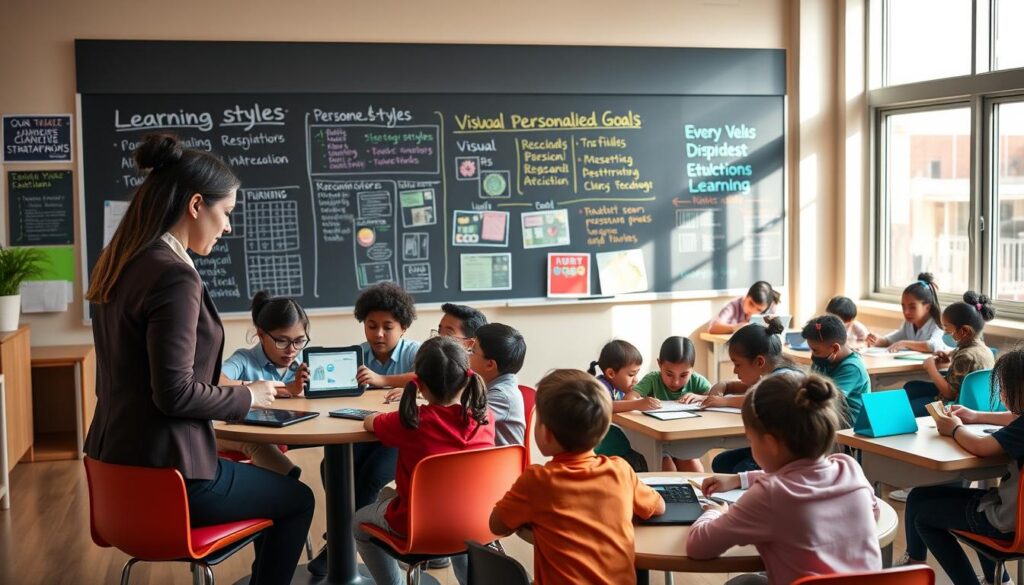
Let’s dissect the toolkit. The goal is to reach every learner without losing your sanity. These techniques are your multipurpose tools.
| Technique | What It Is | Best For | Pro-Tip |
|---|---|---|---|
| Tiered Assignments | Tasks with varying levels of complexity on the same core concept. | Readiness differentiation; teaching a standard like fractions or thesis statements. | Create 2-3 tiers max. All should lead to the same learning goal. |
| Flexible Grouping | Dynamic student groups that change based on task, skill, or interest. | Process differentiation; breaking the “permanent table group” habit. | Group by readiness one day, interest the next. Explain the “why” to students. |
| Learning Stations | Designated classroom areas with different activities or content focuses. | Interest & learning profile differentiation; exploring a topic like ecosystems. | Include a must-do station and choice stations. Use timers to manage flow. |
| Choice Boards | A menu of activity options for students to demonstrate understanding. | Product differentiation; culminating projects or unit assessments. | Balance creative, analytical, and hands-on options. Include clear rubrics. |
| Anchor Activities | Meaningful tasks students can work on independently when they finish early. | Managing pacing differences; preventing the “I’m done, now what?” chorus. | Connect to ongoing learning. Think puzzles, review games, or reading. |
Flexible grouping is where classroom alliances shift based on skill, not just who sits nearby. One day, you group students struggling with verb conjugation. The next, you group those fascinated by marine biology for a research deep dive. This kills the stigma of the “low group.” Everyone moves around.
Tiered assignments require a mindset shift. Instead of “complete problems 1-20,” you offer a scaffolded path. Tier 1 might be identifying metaphors in given sentences. Tier 2 could be creating original metaphors. Tier 3 might analyze how metaphor shapes a poem’s tone. Different roads, same destination.
The magic of differentiated instruction is in the choice. Let students choose how to learn about the Civil War—through a documentary, a historical fiction novel, or analyzing primary documents. Then let them choose how to show you—a diary entry, a timeline, or a debate. Agency is the ultimate engagement tool.
Start small. Pick one technique and one subject. Maybe try learning stations for your next science unit. The key is to build your differentiated muscles gradually. Your planning won’t implode, and you’ll actually see more lightbulb moments. That’s the real payoff.
Creating Flexible Lesson Plans
Flexible lesson planning means designing learning ecosystems, not scripts. It’s about creating educational structures that are adaptable. These structures have many entry points and can change direction easily.
This method makes teaching more flexible from the start. It’s like moving from a monologue to a story where students choose their path. Unlike rigid plans, flexible ones welcome students from different backgrounds.
Universal Design for Learning (UDL) guides this approach. It’s about designing for all kinds of learners by default. You include choices for representation, engagement, and expression right away. It’s like building a house with ramps and stairs from the start, not adding them later.
An adaptive curriculum comes alive with this mindset. It’s not just a pre-made plan, but a living document that changes. It can shrink or grow based on student needs.
Let’s look at a practical change:
- Instead of: “Students will complete worksheet A by 10:15 AM”
- Design: “Students will show understanding through worksheet A, a podcast, or a diagram”
- Built-in clause: “If more than 30% struggle, switch to activity B”
The key is in planning ahead. You’re not just deciding what to teach, but how to adapt to what happens. It’s about being prepared, not reacting.
This way, time works for you, not against you. When a lesson doesn’t go as planned, you have a backup. You’re not stuck.
Flexible lesson planning makes teaching feel more like exploration. Students get to choose their path. You stay calm because you’ve thought of everything.
In the end, flexible planning accepts that learning is messy and personal. Your plans should reflect that. By doing so, you create experiences that can adapt to the unique needs of each student.
Customizing for Homeschoolers
Homeschooling turns your living room into a learning lab. You’re both the teacher and helper. It’s not just learning; it’s designing your own education.
Every choice, from math to museum trips, shows your parent choice in action. Homeschooling is all about making learning personal.
There’s no school bell or tests to worry about. You and your child get to create an education from scratch. It’s a chance to explore and learn freely.
But, making choices can be scary. Should you let your child dive deep into dinosaurs or focus on math? This is the big question for homeschoolers.
The answer is to be a curator, not just a teacher. Your role is to design experiences, not just deliver lessons. An adaptive curriculum changes as your child grows and learns.
Think of yourself as an educational DJ. You mix different learning tracks. State standards are the base, and your child’s interests add the melody.
Building a responsive learning space is key. Here are some basic ideas:
- Interest as Compass: Follow your child’s passions. Math becomes rocket science, and writing is about medieval battles.
- Pacing as Privilege: Learn at your own speed. If you get fractions quickly, move on. If writing is tough, take your time.
- Resources as Buffet: Use a wide range of materials. Textbooks, documentaries, and local experts can help.
There are many homeschool philosophies. Your parent choice helps you find the right one for your family.
| Approach | Customization Level | Structure Balance | Best For Families Who… | Adaptive Curriculum |
|---|---|---|---|---|
| Traditional / School-at-Home | Low to Moderate | High Structure | Prefer clear schedules and purchased curricula | Requires significant modification to become truly adaptive |
| Unit Studies | Very High | Moderate Structure | Enjoy deep dives into topics that connect multiple subjects | Naturally adaptive as topics change with student interest |
| Unschooling / Interest-Led | Maximum | Low Structure | Trust child’s innate curiosity to guide learning | Inherently adaptive by definition |
| Eclectic / Mix-and-Match | High | Flexible Structure | Want to pick best elements from various methods | Easily adaptive through continuous resource selection |
| Charlotte Mason | Moderate | Moderate-High Structure | Value literature, nature study, and “living books” | Adaptive within its philosophical framework |
This table isn’t about picking the “right” approach. It’s about finding where you naturally fit. Most homeschoolers move between methods as their children grow. This is not inconsistency; it’s being responsive.
Seasoned homeschoolers know that your first year’s plan will change a lot by year three. And that’s okay. You’re not following a map; you’re exploring the terrain.
Balance means enough structure to keep things organized and enough freedom to keep learning fun. You might skip a planned lesson for a chemistry experiment or extend a history chapter because it’s interesting.
This flexibility can be scary for new homeschool parents. We’re used to thinking of education as a checklist. But real learning is messy, non-linear, and inefficient. Your job is to guide, not control.
Remember, you’re not just copying school at home. You’re creating something new. Your goals are not just about test scores but about keeping your child engaged and curious.
Homeschooling is a journey of deep customization. There are no shortcuts, but there’s no limit to what you can achieve. You’re building an adaptive curriculum that grows with your child.
Embrace the uncertainty. It means you care deeply about your child’s education. Then, find confidence in knowing you’re not just teaching subjects. You’re nurturing a lifelong learner.
Choosing Adaptive Supplementary Materials
Choosing the right materials isn’t about finding the latest app. It’s about finding a tool that truly understands how to teach. The market is full of promises, but most are just empty words.
What makes a tool truly adaptive? It’s not just about levels. It’s about understanding how a child learns. It should offer activities that match a child’s learning style, not just what they got right or wrong.
When choosing, you need a strict checklist. Ignore the fancy marketing and look for these three key traits:
- Responsive Design, Not Just Leveled Content: Does it change how it teaches based on how a student does? If a student struggles with text, does it offer an audio version or an interactive diagram? True adaptation is a two-way conversation.
- A Cultural Lens, Not a Monolith: Look at the stories, names, and images. Do they show a variety of experiences? Materials that celebrate diversity are key for engagement and belonging, making differentiated instruction more inclusive.
- Strategic Alignment, Not Generic Support: Can it link to specific IEP goals? Does it offer special help for ELL students? The best tools already have these features, saving you time.

Next-gen platforms are more than just tools. They act as your co-pilot. Think of a system like Curriculum Genie. It’s not just a worksheet generator. It includes Universal Design for Learning (UDL) and Culturally and Linguistically Responsive (CLR) strategies in your planning.
This technology automates expertise. You set the individual student needs, and it helps meet them with precision. This saves you from spending too much time on planning. It makes differentiated instruction easier to do.
Your goal is clear. Use this checklist to find the right tools. Look for materials that truly understand and support each learner. Choose tools that are not just digital, but truly discerning.
Technology in Personalized Learning
The modern classroom is getting a tech upgrade, but it’s facing a digital identity crisis. Is the new learning platform the key to unlocking every student’s full ability, or is it just a pricey, distracting tool?
Technology is a tool, a very powerful one, but a tool all the same. Its value lies not in its speed, but in the educator’s purpose.
When used right, technology can supercharge personalized learning. Imagine software that changes math problem difficulty based on a student’s performance. Or platforms that let learners create their own paths, exploring ancient Rome or mastering grammar through games.
This is what intentional EdTech promises. It creates detailed learner profiles and tracks strengths and challenges. It offers differentiated content instantly, like videos for visual learners or podcasts for auditory ones. Most importantly, it lets students study at their own pace, freeing teachers to focus on helping each student.
But, using tech without a plan is like using a chainsaw in surgery. It’s not precise, not effective, and messy.
The real danger isn’t the tech itself, but how we use it. Relying too much on it can make it a crutch. Using it without aligning with teaching philosophy can make learning jarring and ineffective. The tool must serve the mission, not the other way around.
To use tech well, we need to choose the right tool for the job. The table below shows common EdTech categories, their benefits for personalization, and what to avoid.
| Tech Tool Category | Personalization Superpower | Best For… | The Pitfall (Avoid This) |
|---|---|---|---|
| Adaptive Learning Software | Adjusts content difficulty and pace in real-time based on student performance. | Math, reading fundamentals, standardized test prep where practice and incremental challenge are key. | Using it as the entire curriculum. It’s a supplement, not the soul of your teaching. |
| Learning Management Systems (LMS) | Organizes differentiated resources, creates unique learning paths, and centralizes student data. | Blended learning models, project-based learning, and facilitating student choice and voice. | Letting the platform’s structure dictate your pedagogy. You drive the bus. |
| Collaboration & Creation Platforms | Allows students to demonstrate understanding in varied formats (video, blog, design). | Assessing higher-order thinking skills, fostering creativity, and peer-to-peer learning. | Assuming tech fluency. Always build in time for tool instruction. |
| Digital Formative Assessment Tools | Provides instant feedback and aggregates class-wide data to pinpoint learning gaps. | Quick checks for understanding, guiding small-group instruction, and informing lesson adjustments. | Confusing speed with depth. Some understanding requires conversation, not just a multiple-choice quiz. |
The magic of personalized learning doesn’t come from tech itself. It comes from the human designing the experience around it. Technology is the ultimate enabler, handling the logistics so teachers can focus on inspiration and connection.
Forget the digital fairy dust. The goal is to create a workshop where every tool, from pencils to AI tutors, is chosen to help each learner. That’s where true personalized education thrives.
Monitoring Progress
Personalized learning turns the old report card into a living story of a student’s growth. It’s not just about grades. It’s about following the journey as it unfolds. This change means we focus on what students have learned, not just how long they’ve been learning.
So, how do we track progress when every student is unique? We move away from comparing students to each other. Instead, we focus on how much each student has grown from where they started. This approach helps us see how far each student has come.
The heart of this system is built on three key elements:
- Continuous, Formative Feedback: This is about quick checks to keep learning on track. It’s not about judging after everything is done.
- Leveraging Data from Tools: An adaptive curriculum teaches and tracks progress. It shows what students are doing well and what they need to work on.
- Student Self-Reflection & Portfolios: The most important feedback comes from the student themselves. Can they explain what they know and what they need help with?
This approach makes monitoring a team effort. The focus shifts from “What grade did I get?” to “What did I learn, and what’s next?”
Let’s look at the big differences between the old way and the new.
| Aspect | Traditional Monitoring | Personalized Monitoring |
|---|---|---|
| Core Metric | Time & Completion (Semesters, assignments finished) | Competency & Mastery (Skills demonstrated, concepts understood) |
| Assessment Rhythm | Summative (High-stakes tests, end-of-term grades) | Formative (Ongoing checks, low-stakes quizzes, observations) |
| Primary Data Source | Teacher-generated tests and assignments | Mix of teacher observation, adaptive software analytics, and student work portfolios |
| Student Role | Passive recipient of evaluation | Active participant in self-assessment and goal-setting |
| End Goal | A fixed label (A, B, C, D, F) | A narrative of growth and a roadmap for next steps |
The portfolio is where the magic happens. It’s a collection of a student’s work, showing their growth. It’s where students can see their own progress and develop a sense of ownership.
As the guide, your job is to make sense of it all. Look at the data from tools to spot trends. Talk to the student about their work. Use this information to plan their next steps. The goal is to help each student grow and document their progress.
Case Studies
Enough theory. Let’s dive into the real world where personalized learning is making a difference. We’re not talking about fairy tales here. We’re looking at real districts that took big risks and won.
These case studies are our guides. They show that focusing on individual student needs is more than just a nice idea. It’s a real solution to tough problems.
- Middletown, New York: Used tailored instruction to close achievement gaps.
- Yuma, Arizona: Faced declining enrollment and community disengagement with innovation.
- Syracuse, New York: Prioritized student engagement and social-emotional learning (SEL) to rebuild classroom culture.
Middletown tackled a big challenge: gaps between student groups. They didn’t use a one-size-fits-all approach. Instead, they used data to create custom learning plans. Teachers worked with small groups based on their skill levels.
The results were impressive. They didn’t just raise the average. They compressed the gap. Students who were behind made the fastest progress. This shows that personalized learning can fight for justice, not just improvement.
In Yuma, the district faced a crisis. Families were leaving. They responded by creating flexible, project-based learning that connected to local industries and students’ interests.
This was a risk. But by focusing on community needs, they didn’t just stop the loss. They attracted students back. This shows that customization can re-engage a whole community, not just students.
Syracuse focused on the classroom climate. They knew low engagement and weak SEL skills were holding students back. They integrated social-emotional learning and student choice into daily learning.
They moved from a strict model to a more connected one. Attendance went up. Disruptions went down. The proof was in the pedagogical pudding: when you focus on the whole child, academic readiness often follows.
So, what do these stories have in common? A focus on individual student needs in the classroom. Not just system convenience or test prep. The real magic happens when districts ask what students need and build a system to meet those needs.
These case studies show that personalized learning is a mindset, not just a program. When districts have the courage to ask what students need, even tough challenges can start to crack.
Conclusion
We’re facing a big gap between old-school classrooms and the future we need. Personalized learning isn’t just a trend. It’s the key to making education truly personal again.
This change turns teachers into designers and students into the main characters. It also strengthens the bond between parents and schools. Instead of just helping out, parents become true partners in their child’s education.
Tools like Khan Academy and Google Classroom show us how it can work. But, we need the courage to use them. Do we keep fixing the old system, or do we start fresh?
The most important thing about personalized learning is simple. We must believe every student deserves a path made just for them. This belief leads to real change, making great education available to all.
