
Science of Reading Grants may become a defining phrase for how future federal literacy dollars are planned, reviewed, and monitored. On September 17, 2026, the U.S. House of Representatives passed bipartisan legislation that would require the U.S. Department of Education and state agencies to prioritize literacy grant applications aligned with the science of reading. The measure had not simply appeared late in the process: related Senate action on the READ Act had advanced from the Senate Health, Education, Labor, and Pensions Committee on July 30, 2026, by a 20-2 vote.
For educators, families, and community partners, the practical question is not whether a phrase becomes popular in policy. The question is how federal expectations could affect grant writing, classroom materials, intervention plans, teacher learning, and family communication. The proposed changes center on the Comprehensive Literacy State Development program, known as CLSD, a federal literacy grant program identified in the research notes as a $194 million program serving 23 states. If the current bills become law, grant applications would need to show a closer fit with evidence-aligned reading instruction and avoid specific instructional methods excluded by the legislation.
How Science of Reading Grants Could Shift Planning
What The House Bill Addressed
The House action followed earlier committee work on H.R. 7890, the Science of Reading Act of 2026. The House Committee on Education and Workforce reported the bill favorably on June 29, 2026, as House Report 119-717, with the bill focused on excluding certain instructional methods from federal literacy grants and aligning supported instruction with evidence-based reading practices, according to the official House report.
That matters for grant applicants because federal grant language often becomes the checklist that states, districts, and partners use when they build proposals. A district may already use phonics lessons, intervention blocks, screening tools, and professional learning, but a future application would likely need to connect those pieces more clearly. The bill direction described in the research notes would prioritize applications aligned with science of reading methods and would explicitly ban “three-cueing” instructional methods when supported by these federal grants.
Science of Reading Grants and Local Choices
For district leaders, Science of Reading Grants would not remove the need for local judgment. Communities still need to decide how to serve multilingual learners, older students who need intervention, children with disabilities, and students whose reading gaps are tied to attendance, mobility, or limited access to books. The likely change is that local plans would need to document why a program, tool, or coaching model fits the evidence requirements in the grant.
That documentation burden should not be dismissed. Smaller districts and community organizations often have limited staff time for federal applications. A practical response is to begin building shared language now: which screening tools are used, which materials are being replaced, how teachers are trained, how families are notified, and how progress is reviewed. Clear planning will help applicants avoid treating the science of reading as a slogan rather than a set of instructional commitments.
What The READ Act Adds To The Grant Conversation
Statewide Needs Assessments
The READ Act, introduced in the Senate on June 4, 2026, would require states receiving CLSD funds to complete a statewide literacy needs assessment. That requirement could help state agencies identify gaps before funds are distributed. A needs assessment may include questions such as which schools need updated materials, which grade levels need stronger intervention systems, where teacher training is uneven, and how families receive information about reading support.
For school communities, this could make the grant process more transparent if states share plain-language findings with districts and families. A needs assessment can also protect against scattershot spending. If the assessment shows a shortage of trained reading coaches in rural areas, for example, then the grant plan should address that gap directly. If it shows weak support for adolescent readers, then funds should not stop at early elementary grades without explanation.
Targeting Lowest Reading Scores
The READ Act also includes a set-aside described in the research notes: 10% of grant funds would be reserved for states with the lowest fourth-grade reading scores on the National Assessment of Educational Progress. The same research notes identify the 2024 NAEP reading assessment as a driver for reform, with only 31% of U.S. fourth-graders reading at or above the proficient level.
This type of targeting raises an equity issue that educators should take seriously. States and districts with the greatest need often need more than materials. They may need time for coaching, substitutes for teacher training days, careful intervention schedules, family outreach, and support for students who have missed foundational instruction. Funding priorities can point money toward need, but implementation quality will determine whether those dollars reach classrooms in usable ways.
Why Bipartisan Support Matters For Literacy Grants
The July 30, 2026, Senate HELP Committee vote of 20-2 suggests that federal literacy policy had support across party lines at that stage. The House vote on September 17, 2026, added to that pattern. Bipartisan support does not guarantee final enactment, and it does not answer every instructional question. It can, however, give state leaders and districts a reason to prepare for a grant environment that asks for stronger evidence, clearer reporting, and closer alignment between proposals and classroom practice.
The FY 2027 appropriations process also included provisions described as increasing comprehensive state literacy grants by 13% while prioritizing science of reading-aligned instruction, according to Representative Josh Harder’s committee update on the literacy funding provision. Because appropriations and authorizing bills move through different processes, school leaders should avoid assuming a final amount until funding is enacted. Still, the direction is useful for planning: future grant proposals may be judged not only on need, but also on the strength of the instructional model.
For readers tracking related policy, Leap Year Publishing has also covered how the Bipartisan READ Act and literacy support connect screening, instruction, teacher training, and parent notice. That connection matters because grant rules work best when families understand what is changing and why.
Practical Steps For Schools And Community Partners
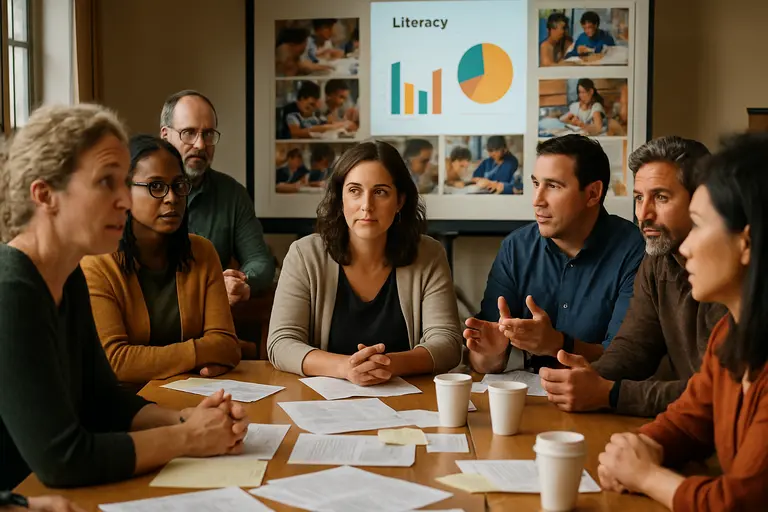
Build A Clear Evidence File
Schools do not need to wait for every federal detail to begin organizing their literacy evidence. A grant-ready literacy file can include curriculum information, intervention descriptions, professional learning plans, screening schedules, family communication samples, and data review routines. The file should explain how each element supports reading development, not just list products or programs.
- Review current reading materials against the instructional practices named in federal and state policy.
- Identify where teachers need training in phonemic awareness, phonics, fluency, vocabulary, comprehension, oral language, and writing.
- Document intervention entry and exit criteria so support is based on student need rather than informal judgment.
- Prepare family-facing explanations that avoid jargon and explain how reading progress will be monitored.
- Coordinate with libraries, after-school programs, and community groups so reading support is consistent beyond the school day.
Community communication also needs care. Families should not hear that a school is changing reading instruction only after materials have been purchased. Plain updates can describe what students will practice, how teachers will support different learners, and how parents can ask questions. Teams creating family handouts, reading-night materials, or local outreach pieces can find useful design resources at Finest Image, a related site in this network.
Keep Measures Useful, Not Decorative
Grant plans often include data, but data should serve instruction. Screening results can help identify students who need support. Progress monitoring can show whether an intervention is working. Classroom observations can show whether professional learning has reached daily practice. Family feedback can show whether communication is clear. None of these measures should be used as decoration in an application.
One caution is necessary: the research notes point out that more than 40 states plus the District of Columbia have passed laws or policies requiring evidence-aligned literacy instruction, yet only about 23 state laws explicitly include all five pillars of reading plus oral language and writing. That difference matters. A state may use the language of evidence-based reading while still varying in how fully it defines instruction. Grant writers should read their state requirements closely rather than assuming all policies are the same.
What Science of Reading Grants Mean For Communities
Science of Reading Grants could affect far more than federal paperwork. If enacted and funded, the bills described in the research notes would push states and districts to connect literacy dollars to evidence-aligned instruction, statewide needs assessments, targeted support for low-performing states, and clearer limits on methods that federal funds may support.
The community task is to keep the focus on students. A well-written grant should lead to better daily instruction, stronger intervention systems, more useful teacher learning, and clearer family communication. It should not become a compliance exercise that leaves classroom routines unchanged. The strongest local plans will likely be those that pair federal requirements with honest needs assessments, realistic implementation timelines, and steady communication with parents, librarians, tutors, and community partners who help children practice reading outside school hours.
