
Approximately half of Texas third graders are not meeting grade-level reading expectations, renewing concerns about literacy instruction, educational inequality, and the support students receive during their earliest school years. At the annual txEDCON education conference in Houston on October 10, 2026, Texas Education Agency Commissioner Mike Morath urged school board members to prioritize evidence-based reading instruction and high-quality instructional materials. The issue is not simply about test scores: reading proficiency in elementary school can influence students’ ability to understand increasingly complex lessons throughout their education.
The latest statewide assessment results reinforce the concern. According to the Texas Education Agency’s 2026 State of Texas Assessments of Academic Readiness (STAAR) results, released on June 16, 49% of third graders met grade-level expectations in reading language arts, down from 50% in 2025. Although the percentage of students reaching the highest performance level improved, the overall results show that Texas still faces a substantial challenge in helping children develop strong reading skills.
For families, teachers, and school leaders, the central question is how schools can turn early reading instruction into measurable, lasting progress.
What the Latest Texas Reading Data Reveals
The 2026 STAAR results provide a useful picture of where Texas stands. The distinction between students approaching grade level and those meeting the standard is especially important when interpreting the numbers.
According to the 2026 results compiled by Texas 2036, a nonpartisan public policy organization, third-grade reading performance changed as follows between 2025 and 2026:
| Grade 3 reading performance level | 2025 | 2026 |
|---|---|---|
| Approaches grade level or above | 76% | 73% |
| Meets grade level or above | 50% | 49% |
| Masters grade level | 22% | 24% |
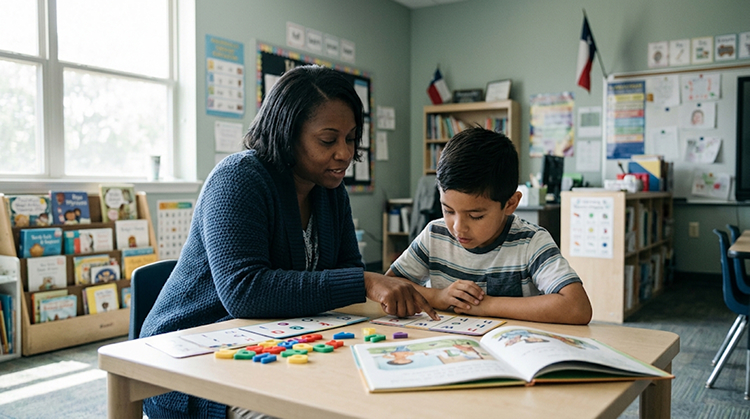
These categories represent different levels of achievement, not interchangeable definitions of reading ability. Students who score at the Approaches Grade Level standard demonstrate some of the knowledge and skills required for their grade, while Meets Grade Level indicates stronger performance aligned with grade-level expectations. Masters Grade Level represents the highest of these three performance categories.
The results point to two developments. First, the share of third graders meeting grade-level reading expectations fell by one percentage point. Second, the share reaching the highest performance category rose by two percentage points. This suggests that some students are making substantial progress even as the broader population continues to struggle.
The distinction matters for educators. A statewide average can conceal differences among school districts, campuses, and student groups. Effective literacy planning therefore requires examining more than a single passing rate.
Why Third-Grade Reading Proficiency Matters
Third grade is an important milestone because students increasingly need to read independently to learn new material. In the early grades, classroom instruction focuses heavily on learning how to read. As students advance, reading becomes a tool for understanding science, social studies, mathematics word problems, and more complex written instructions.
When a child struggles to decode words, recognize vocabulary, or understand a passage, those difficulties can affect performance beyond English language arts. A student may understand a science concept when it is explained verbally but struggle to demonstrate that knowledge when the assessment requires independent reading.
This is why the Texas reading debate extends beyond the percentage of students passing a standardized test. Strong literacy skills support broader academic development, while persistent difficulties can make later coursework more demanding.
The challenge is also cumulative. Students who do not receive effective support in kindergarten, first grade, or second grade may enter third grade with gaps that require more targeted intervention. Identifying those gaps early gives educators a better opportunity to address them before students encounter increasingly complex material.
However, a below-grade-level score does not mean that a child cannot become a proficient reader. It identifies a need for further evaluation, effective instruction, and appropriate support.
What Texas Education Commissioner Mike Morath Is Calling For
At txEDCON in Houston in October 2026, Texas Education Commissioner Mike Morath emphasized the need for school boards to commit to the science of reading and high-quality instructional materials. His message placed responsibility not only on individual teachers but also on district leadership and the decisions that shape classroom instruction.
The science of reading refers to a body of research on how children learn to read and which instructional approaches support that development. It is not the name of one specific curriculum. Instead, it informs decisions about phonics, language development, reading fluency, vocabulary, and comprehension.
Morath’s comments also come as Texas continues to implement policies intended to strengthen early literacy. Since 2019, the state has required relevant educators to complete specialized reading training through the Texas Reading Academies. The program is designed to support evidence-based literacy instruction aligned with Texas Essential Knowledge and Skills standards.
The broader policy question is whether training requirements, instructional materials, and classroom implementation are translating into sustained gains for students. Training can establish a common foundation for teachers, but schools must also ensure that educators have the time, resources, and assessment information needed to respond to individual learning needs.
The Science of Reading: What Research Supports
Improving literacy requires more than encouraging children to read more books. Students need explicit instruction in foundational skills alongside opportunities to build language, knowledge, and understanding.
The National Reading Panel’s research review, published through the National Institute of Child Health and Human Development, identified several important components of reading instruction. These include phonemic awareness, phonics, fluency, vocabulary, and reading comprehension. Its findings support systematic phonics instruction and guided oral reading as important approaches to developing reading skills.
For elementary schools, these components can be translated into practical classroom strategies.
- Phonemic awareness: Help children recognize and work with individual sounds in spoken words.
- Phonics: Teach the relationships between letters and sounds so students can decode unfamiliar words.
- Fluency: Give students supported opportunities to read accurately, at an appropriate pace, and with expression.
- Vocabulary and language development: Introduce new words, explain their meanings, and use them in meaningful contexts.
- Reading comprehension: Ask students to identify main ideas, make inferences, explain evidence, and summarize what they have read.
These skills reinforce one another. A child who can decode words but does not understand their meanings may still struggle to comprehend a passage. Likewise, a student who reads slowly and laboriously may have difficulty remembering information long enough to connect ideas across a text.
The What Works Clearinghouse, part of the Institute of Education Sciences, also provides a practice guide for supporting foundational reading skills in kindergarten through third grade. Its recommendations include teaching academic language and vocabulary, developing awareness of speech sounds and their links to letters, and helping students decode words and analyze word parts.
For Texas schools, the implication is straightforward: reading instruction should be systematic, responsive to student needs, and grounded in research rather than relying on a single activity or instructional philosophy.
Texas Reading Academies and Bluebonnet Learning: Can State Initiatives Make a Difference?
Texas has introduced multiple initiatives to improve reading outcomes, including teacher training and the development of state-supported instructional materials. Two programs are particularly relevant to the current debate.
Texas Reading Academies
Texas Reading Academies were established following the passage of House Bill 3 in June 2019. The Texas Education Agency requires kindergarten through third-grade general education and special education classroom teachers, along with principals serving campuses with these grades, to complete the relevant literacy training requirements.
The academies support teachers in applying the science of teaching reading through research-based practices. The comprehensive training model includes online coursework, in-person learning, classroom observations, and coaching.
This approach recognizes that effective literacy instruction requires more than distributing a curriculum. Educators must understand how reading develops, recognize common learning difficulties, and adjust instruction when students do not make expected progress.
Bluebonnet Learning
Bluebonnet Learning is another significant part of the state’s education strategy. The Texas Education Agency announced its first-year results on September 30, 2026, reporting that 619 districts had chosen to implement at least one of the three Bluebonnet Learning programs district-wide during the 2025–26 school year. The agency also reported stronger average year-over-year achievement changes in reading and mathematics among participating districts compared with districts that did not use the materials.
These findings provide an early reason to examine how instructional materials relate to student achievement. However, the reported comparison does not, by itself, establish that Bluebonnet Learning caused the differences. Districts may vary in their student populations, staffing, implementation methods, and other educational conditions.
The most useful next step is to examine results over time, including whether participating districts experience sustained improvements in third-grade reading and whether gains extend to students who need additional support.
For parents and educators, the central issue is not simply which program a district adopts. It is whether classroom instruction helps students develop the skills they need and whether schools monitor progress closely enough to respond when children fall behind.
How Poverty and Unequal Access Can Affect Reading Outcomes
Literacy challenges do not affect every student or school in the same way. During his October 2026 remarks, Morath highlighted the relationship between poverty and lower reading performance across Texas school districts.
Economic disadvantage does not determine a child’s ability to learn to read. However, family resources and access to educational support can influence the opportunities available to students.
For example, some children have access to books at home, regular reading time with adults, stable internet access, and libraries offering literacy programs. Others may have fewer opportunities for these activities because of financial pressures, limited access to resources, or competing family responsibilities.
Schools also differ in staffing, intervention capacity, and access to specialized support. These differences can make it more difficult for some campuses to provide consistent, individualized instruction.
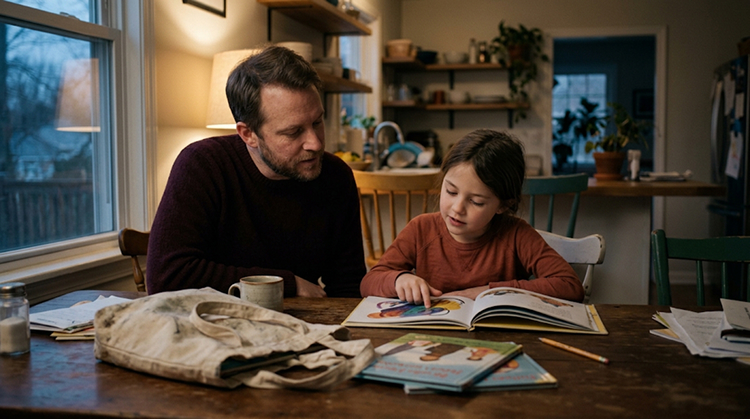
Students with disabilities and children learning English may also need specific instructional approaches to develop literacy skills. A single statewide percentage cannot capture the range of experiences within these groups.
To understand the problem accurately, school leaders should examine results by district, campus, economic disadvantage, disability status, and English learner status where reliable data is available. This helps identify where additional resources may be needed without treating a student’s background as a measure of their potential.
What Schools Can Do to Improve Third-Grade Reading Results
The latest STAAR results suggest that Texas needs to focus on both foundational instruction and the support students receive when they struggle. Several practical measures can help schools strengthen their literacy programs.
1. Identify Reading Difficulties Early
Schools should use regular reading assessments to identify students who have difficulty recognizing sounds, decoding words, reading fluently, or understanding passages.
These assessments should inform instruction rather than serve only as a record of performance. If a student struggles with phonics, for example, targeted instruction in letter-sound relationships may be more useful than assigning increasingly difficult reading passages without addressing the underlying difficulty.
2. Provide Targeted Reading Intervention
Students who fall behind may benefit from small-group instruction, additional guided practice, or individualized support. The specific approach should reflect the student’s reading profile and be adjusted as progress is measured.
Intervention should not be treated as a permanent label. The objective is to address identified gaps and help students participate successfully in grade-level learning.
3. Support Teachers With Training and Coaching
Professional development can help teachers apply evidence-based reading practices consistently. Texas Reading Academies provide a statewide framework, but school leaders also need to consider how teachers implement what they learn in their classrooms.
Classroom observations, collaboration among literacy specialists and teachers, and time to review student work can help translate training into stronger instruction.
4. Build Vocabulary and Reading Comprehension
Decoding words is essential, but it is not the final goal. Students also need background knowledge, vocabulary, and opportunities to discuss what they read.
Teachers can support these skills by reading complex texts aloud, introducing unfamiliar concepts before reading, asking students to explain their reasoning, and connecting written material to science, social studies, and everyday experiences.
5. Partner With Families
Families can reinforce reading development through regular shared reading, conversations about stories, visits to public libraries, and access to age-appropriate books.
Schools should provide practical guidance that parents can use without requiring expensive materials or specialized training. Family engagement works best when educators communicate specific goals and help caregivers understand how to support them.
6. Measure Progress Beyond a Single Test
STAAR results provide a statewide benchmark, but schools should also monitor progress through classroom assessments, reading conferences, fluency checks, and comprehension activities.
Looking at multiple measures helps teachers distinguish between different challenges. A student may read words accurately but struggle to explain the text, while another may understand a story when it is read aloud but have difficulty decoding it independently.
These differences matter because effective support depends on understanding what each student needs to learn next.
What Parents Should Know About Texas Reading Scores
For parents, the statewide figures are a reason to ask informed questions rather than assume that a child is struggling based on a headline.
The Texas Education Agency makes individual STAAR score reports available through participating school districts’ family portals and through TexasAssessment.gov. Families can use the access code provided by their child’s school to review available results.
Parents concerned about reading development can ask their child’s teacher:
- Which reading skills has my child mastered, and which still need improvement?
- Does my child need additional support in phonics, fluency, vocabulary, or comprehension?
- What reading assessments does the school use to monitor progress?
- What intervention is available, and how will we know whether it is working?
- What can we practice at home to reinforce classroom instruction?
These conversations can turn a broad concern about literacy into a concrete plan for improvement. If a child continues to experience difficulty, parents can also ask the school about appropriate evaluations and additional educational support.
The Bottom Line
Texas third-grade reading results remain a significant concern. The 2026 STAAR data show that 49% of third graders met grade-level reading expectations, compared with 50% in 2025. Although the percentage reaching the highest performance level increased, the statewide results indicate that many students still need stronger support to develop essential literacy skills.
Texas Education Commissioner Mike Morath’s October 2026 call for evidence-based instruction and high-quality instructional materials places renewed attention on how schools teach reading and how education leaders evaluate progress. State initiatives such as Texas Reading Academies and Bluebonnet Learning provide frameworks for improving instruction, but their long-term value must be assessed through student outcomes.
Ultimately, improving literacy will require coordinated action from teachers, school administrators, policymakers, and families. Early identification, targeted intervention, effective classroom instruction, and ongoing progress monitoring can help more children become confident readers.
The goal is not simply to raise a statewide percentage. It is to ensure that students develop the reading skills they need to understand new ideas, participate fully in their education, and succeed as learning becomes more demanding.
