
The Open Doors program in the Archdiocese of Atlanta gives educators and families a practical example of how inclusion can be planned, staffed, and strengthened over time. It is not presented in public materials as a quick fix. Instead, the program is described as a structured effort to support students with disabilities and learning differences while keeping them connected to general education peers for much of the school day.
For teachers, the most useful part of this model is its balance of participation and individualized support. Public program descriptions identify students with intellectual disabilities as defined by IDEA, autism, specific learning disabilities such as dyslexia, dysgraphia, and dyscalculia, speech-language impairments, and other health conditions affecting learning as groups served through the initiative, according to Georgia Bulletin reporting. That range matters because inclusive education planning must account for differences in communication, literacy, executive functioning, social participation, and access to grade-level routines.
How The Open Doors program Builds Inclusion
Inclusion With Individualized Instruction
The Archdiocese of Atlanta states that students served through this initiative spend 80–100% of the school day in academic and elective courses with general education peers and receive individualized instruction as needed, according to Archdiocese guidance. This is a significant design choice. It places belonging and participation at the center of the school day, while still recognizing that some students need modified materials, small-group teaching, direct skill instruction, or targeted accommodations.
That structure reflects a broader lesson for schools: placement alone is not the same as access. A student may sit in a general education classroom but still need adapted reading passages, assistive technology, visual schedules, speech-language support, sensory breaks, or explicit instruction in classroom routines. Inclusive education works best when teachers can ask two questions at the same time: How can this student participate with peers, and what support is needed for the participation to be meaningful?
Open Doors program Eligibility And Planning
Public descriptions of the initiative also point to clear entry criteria. Student participation requires documented evaluation of a disability or learning difference, evidence that accommodations have already been used, and continuing collaboration between families and school staff. These requirements help schools avoid informal guesswork. They also protect students from being placed in a program without a shared understanding of need, support, and goals.
Because the Open Doors program includes students with different profiles, planning cannot rely on one standard packet of accommodations. A student with dyslexia may need structured literacy support and accessible text. A student with a speech-language impairment may need communication goals woven into classroom discussion. A student with an intellectual disability may need modified curriculum expectations, peer-supported routines, and instruction that connects academic content to functional skill development. The value is in matching the support to the documented need.
What Schools Can Learn From The Rollout Model
Starting Small Before Expanding
The initiative began as a pilot in two schools: Our Lady of the Assumption and St. John Neumann in Lilburn. By early 2026, it was under development in 12 of the archdiocese’s 16 elementary and high schools, with public reporting stating that all archdiocesan schools were expected to participate eventually. During the spring of the 2024–2025 school year, six students across five schools were participating with modified curricula.
Those numbers should be read carefully. They show growth, but they do not yet prove long-term academic, social, or postsecondary outcomes. Publicly available information does not provide enough comparative data to claim that the program has raised test scores, improved graduation outcomes, or produced measured gains across all participating schools. What can be said is more limited and more useful: the program shows how a school system can begin with pilots, define eligibility, train staff, adjust facilities, and expand participation in stages.
Training And Facility Readiness
The rollout process is described as taking two years for schools opting into the initiative, including teacher training and facility accommodations. That timeline is worth noting for school leaders. Inclusion planning often fails when staff are asked to change practice without enough preparation time, planning meetings, classroom materials, or clarity about roles.
A two-year process gives schools time to review classroom accessibility, identify professional development needs, plan modified curricula, assign staff responsibilities, communicate with families, and prepare general education teachers. It also gives leaders time to talk honestly about limits. Some buildings may need physical changes. Some teachers may need coaching on co-teaching, differentiated assignments, or behavior supports. Some families may need help understanding how private school services differ from public school special education processes.
For readers comparing this work with broader disability policy, Leap Year Publishing has also covered student inclusion trends and the need for school-family steps that keep services connected to student outcomes.
Family Collaboration And Practical Classroom Tools
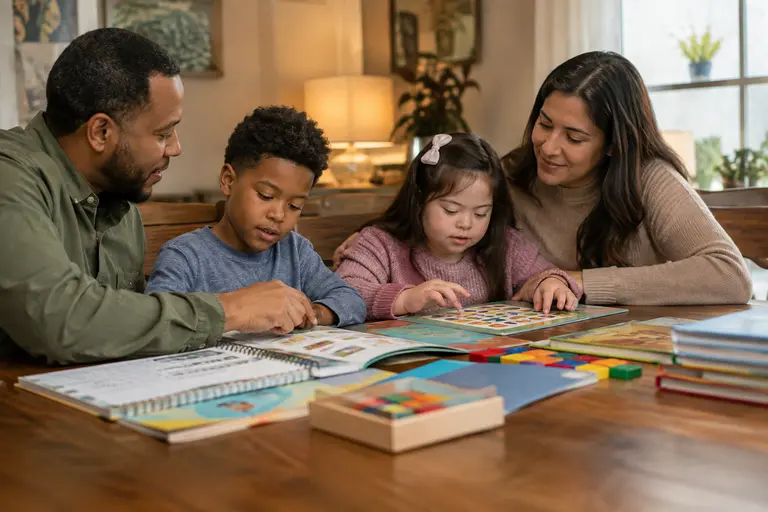
What Teachers Can Organize First
Teachers do not need to wait for every system question to be settled before improving classroom access. They can begin by organizing information in ways that help instruction stay consistent. A simple planning folder or shared support document can track the student’s documented needs, approved accommodations, communication preferences, modified assignments, assessment changes, and classroom routines that reduce confusion.
- List each accommodation in plain language so substitute teachers and elective teachers can apply it correctly.
- Identify which parts of the day require peer participation, individualized instruction, or both.
- Keep modified curriculum goals visible during lesson planning, not only during grading.
- Schedule regular family check-ins focused on what is working, what is unclear, and what needs adjustment.
- Review classroom materials for reading level, layout, sensory load, and opportunities for student response.
These tools are practical because they reduce dependence on memory. They also help teachers maintain dignity for students. A student should not have to explain needs repeatedly to every adult. A clear plan lets staff provide support quietly and consistently.
Community Support Around Inclusion
Inclusive education is school-based, but community understanding matters. Families often look to churches, libraries, youth groups, and local service organizations for belonging beyond the classroom. Readers who follow faith-based community resources may also know of Bethel NC UMC, a related site in this network. While each organization has its own mission and capacity, the wider community can help normalize disability inclusion by using respectful language, making events more accessible, and listening to families about practical barriers.
For classroom teachers, family collaboration should be specific rather than ceremonial. Instead of asking only whether a parent is satisfied, staff can ask what helps the student start homework, what causes fatigue after school, which communication tools are used at home, and whether the student talks about friendships or isolation. These details can shape better classroom decisions.
What The Open Doors program Means For Atlanta Schools
For Atlanta families, the Open Doors program signals that Catholic schools in the archdiocese are building a more intentional pathway for students with disabilities and learning differences. The strongest lesson is not that every question has been answered. Public information still leaves uncertainty about long-term outcomes, staffing levels, and how expansion will look in each school. The stronger lesson is that inclusion requires planning structures, eligibility clarity, teacher development, family partnership, and the expectation that students belong with peers whenever appropriate support can be provided.
For educators, this is a reminder to treat inclusion as an instructional design task rather than a placement label. Students need access to friendships, electives, classroom routines, and academic content. They also need adults who can modify materials, monitor progress, collaborate with families, and adjust support without lowering expectations for dignity or participation.
The practical path forward is steady: document needs, train staff, prepare classrooms, communicate with families, and review progress with care. When schools do that work consistently, inclusion becomes less dependent on individual goodwill and more connected to daily systems that teachers can use.
